In this article
- What is boiler commissioning?
- Who is involved in boiler commissioning?
- Stage 1: Pre-commissioning checks
- Stage 2: Hydrostatic test
- Stage 3: Flushing the pipework
- Stage 4: Refractory dry-out
- Stage 5: Alkali boil-out
- Stage 6: First firing
- Stage 7: Testing the safety devices
- Stage 8: Combustion tuning
- Stage 9: Controls and water treatment
- Stage 10: Performance trial
- Stage 11: Training and handover
- Which boiler commissioning mistakes cause trouble later?
- Frequently asked questions about boiler commissioning
- Start right, run for decades
Boiler commissioning is the planned sequence of checks and tests that takes a newly installed boiler from mechanical completion to safe, proven operation. It covers pre-commissioning checks, hydrotest, flushing, refractory drying, boil-out, first firing, safety device tests, combustion tuning, performance trials and handover. Each step has a record, and nothing is skipped to save time.
In fact, a boiler that is rushed into service carries its faults for years. In contrast, a careful start protects the pressure parts, the people and the warranty. This guide sets out a boiler commissioning checklist that owners can follow with their contractor.
What is boiler commissioning?
In short, commissioning begins when construction ends. At that point, the boiler is installed, but nobody has yet proved it. The commissioning team then brings each system to life in a safe order.
First come the utilities: power, water, fuel and air. Next come the auxiliaries, such as pumps, fans and the water treatment plant. After that, the boiler itself is cleaned, fired, tested and tuned. Finally, the team proves the output and hands the plant to the operators.
Who is involved in boiler commissioning?
As a result, several parties share the work. Clear roles prevent gaps.
| Party | Main role |
|---|---|
| Boiler manufacturer or its approved partner | Leads the start-up, protects the warranty |
| Installation contractor | Completes construction, clears punch items, supports testing |
| Burner specialist | Sets up and tunes combustion |
| Water treatment supplier | Supplies chemicals, sets the treatment programme |
| Owner’s engineers and operators | Witness tests, learn the plant, accept handover |
| Statutory inspector | Witnesses the pressure test and safety valve tests, issues certification |
Maven Technical Services is the appointed partner of Thermax for the installation and maintenance of boilers, so we carry out this work routinely.
Stage 1: Pre-commissioning checks
Before any system starts, the team confirms that construction is complete. They walk every line against the drawings and list what remains. People call this the punch list.
Mechanical checks
- The boiler sits level on its foundation, with anchor bolts tight and room to expand.
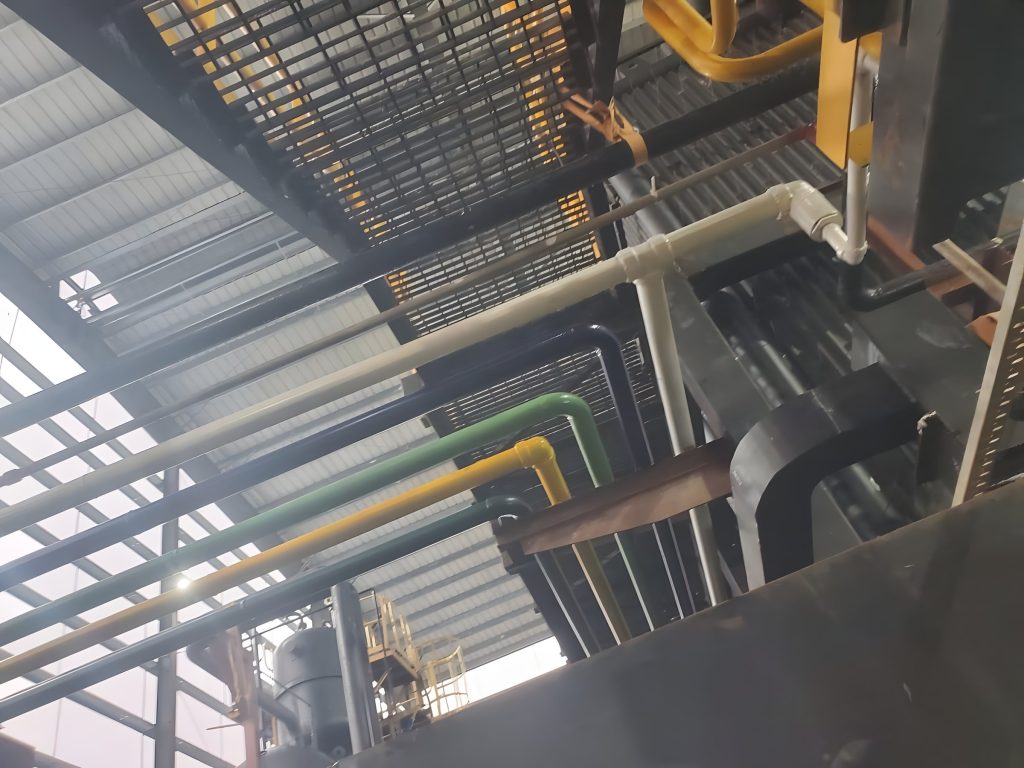
- All piping matches the drawings, with supports, drains and vents in place.
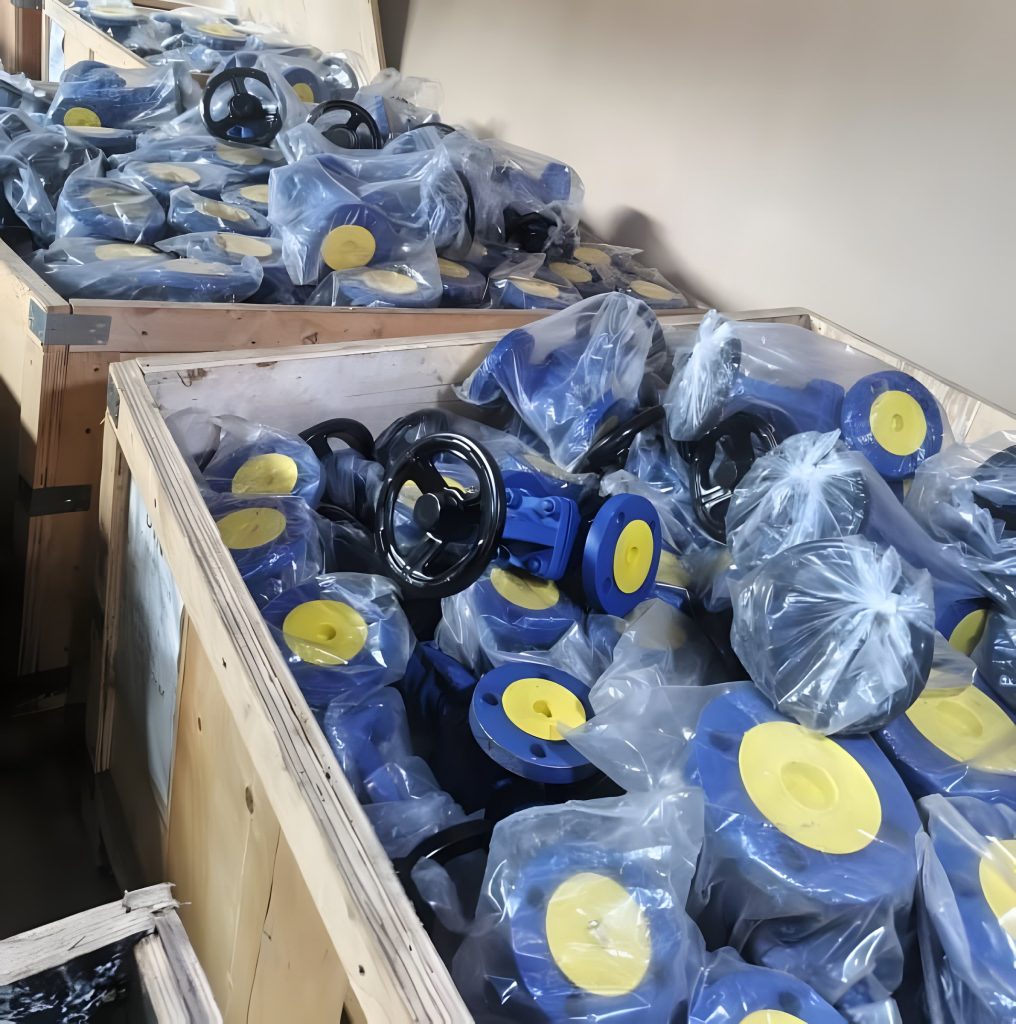
- Valves are the right type and face the right direction.
- Safety valves have the correct set pressure and discharge safely.
- Gauge glasses, pressure gauges and instruments are fitted and visible.
- Ducting, dampers and the chimney are complete and free of debris.
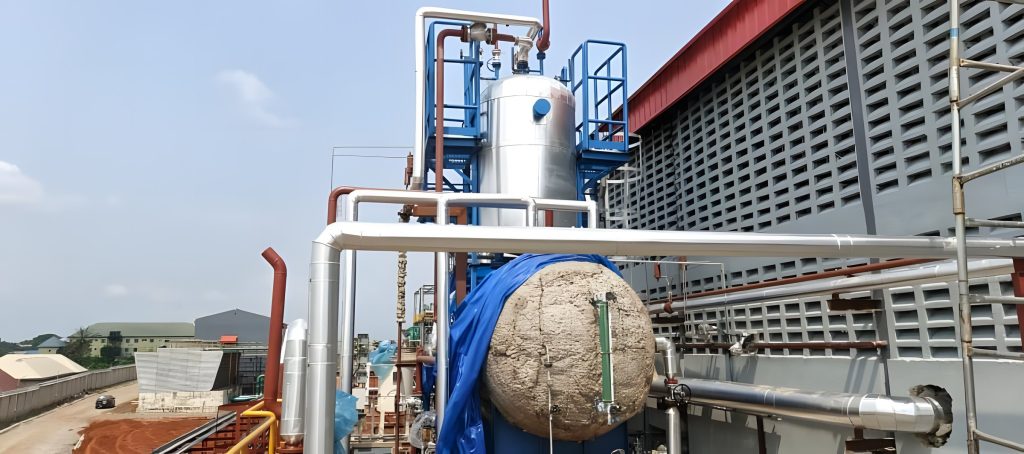
- Insulation is finished, except where a test needs bare joints.
- Access platforms, ladders and handrails are safe.
Electrical and control checks
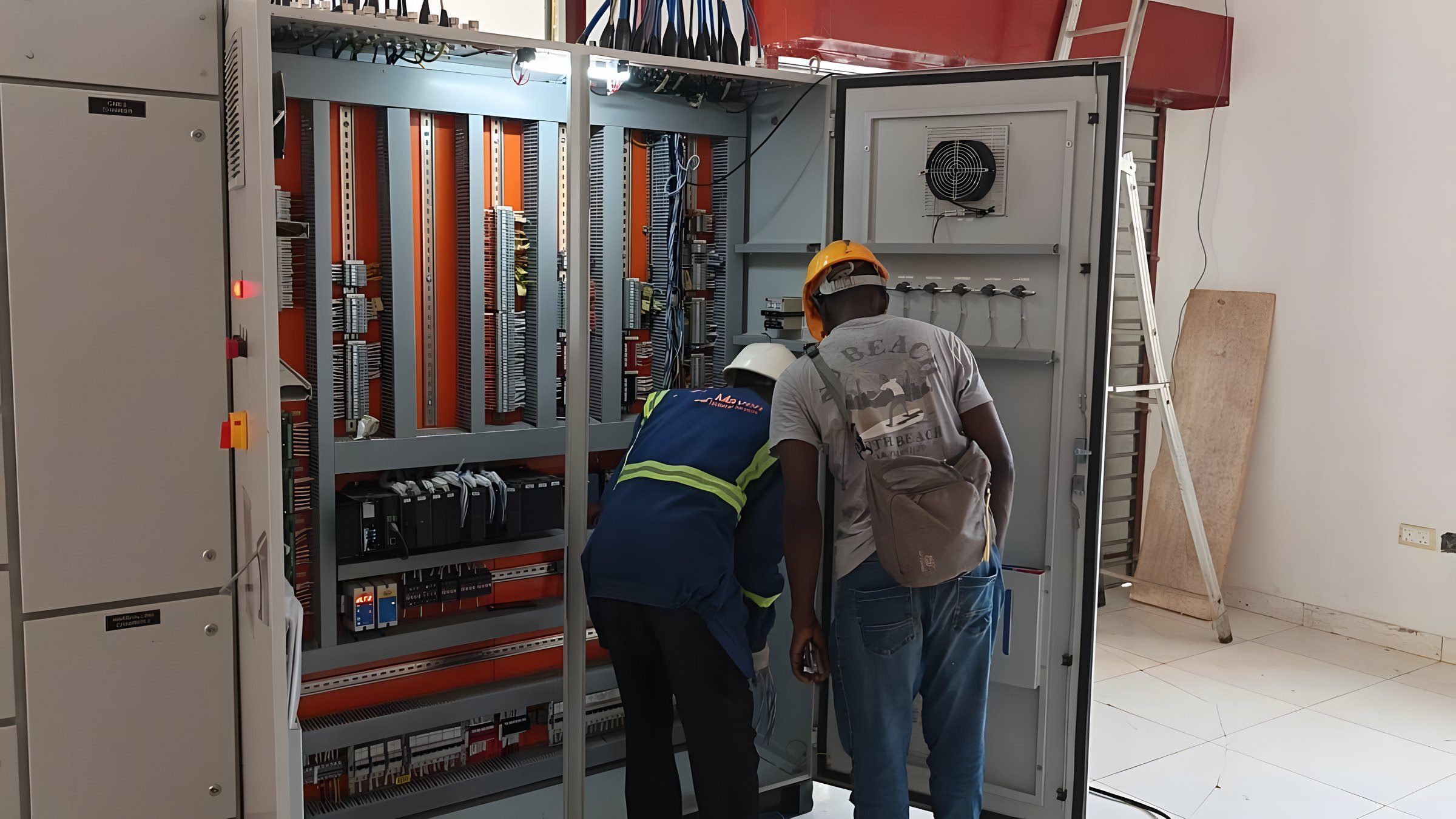
- Cables have passed insulation and continuity tests.
- Motors turn in the right direction.
- Each instrument reads correctly at the panel, loop by loop.
- Interlocks and alarms respond as the logic requires.
- Emergency stops work.
Utilities
- Treated water is available in the right quantity and quality.
- Fuel is on site, and the fuel system has passed its leak test.
- Power is stable.
- Drains can take blowdown and boil-out water safely.
Stage 2: Hydrostatic test
Next, the pressure parts face a hydrotest. The team fills the boiler with treated water, vents the air and raises the pressure to the figure the code requires, commonly one and a half times the working pressure.
The statutory inspector normally witnesses it, and the test follows a recognised code such as the ASME Boiler and Pressure Vessel Code. Inspectors then examine every weld, tube end, manhole and flange. Afterwards, the team records the result and issues a certificate. Our guide to hydrostatic testing describes the method in detail.
Stage 3: Flushing the pipework
First, new pipes contain welding slag, rust and dirt. If that debris reaches valves, pumps and traps, it damages them. So the team flushes the feed water and fuel lines before use.
However, steam lines get a different treatment. Later, once the boiler makes steam, the team blows them through at high velocity to an open, safe outlet. This steam blow carries debris out before it can reach process equipment or a turbine.
Stage 4: Refractory dry-out
In fact, many boilers contain refractory brick or castable linings. Fresh refractory holds water. If it heats too quickly, that water turns to steam inside the lining and cracks it.
Therefore, the team dries it slowly. A small fire or a low burner setting raises the temperature in steps, along a curve that the refractory maker specifies. On large biomass and water tube boilers, this stage can take several days. On small packaged boilers, it is short.
Stage 5: Alkali boil-out
For example, new boilers carry oil, grease and mill scale from manufacture. On the water side, these cause foaming, carryover and poor heat transfer. Boil-out removes them.
The procedure is as follows.
- Fill the boiler with treated water and add the specified alkaline chemicals.
- Fire gently, and raise the pressure to a fraction of working pressure.
- Hold for the specified time, usually many hours, while taking water samples.
- Blow down at intervals to remove sludge.
- Cool, drain and rinse the boiler.
- Open and inspect the drums or shell, and clean out any residue.
- Refit the internals with new gaskets.
Handle the chemicals with proper protective equipment, and dispose of the waste water responsibly.
Stage 6: First firing
Now the burner or the grate lights for normal service. The team follows the manufacturer’s start-up curve.
Purge. First, the fan purges the furnace with air. This clears any unburnt fuel, which could otherwise explode on ignition.
Light off. Next, the burner lights at low fire. The flame detector must see the flame within seconds, or the fuel valves close.
Raise pressure slowly. Then the team raises the pressure gradually. Thick metal and refractory need time to expand evenly. As the boiler warms, fitters check for leaks and tighten manhole and flange bolts as the maker allows.
Check expansion. Finally, the team confirms that the boiler and the pipes move freely on their supports.
Stage 7: Testing the safety devices
This stage is the heart of boiler commissioning. Every protective device must prove that it works.
- Low water alarm and cut-out. The team lowers the water level under control and confirms the alarm and then the burner lockout. Boilers have two independent low water devices, and each one is tested.
- High water alarm. The alarm must sound before water can carry over.
- Flame failure. With the flame signal interrupted, the fuel valves must shut within the specified time.
- High pressure limit. The burner must trip when pressure exceeds the limit.
- Safety valves. Each valve must lift at its set pressure and reseat cleanly. The inspector normally witnesses this test.
- Fuel safety checks. Gas pressure switches, valve proving and oil temperature interlocks must all respond.
- Fan and air proving. The burner must not fire without proven airflow.
- Emergency stop. It must shut the plant down from every station.
Record each result with the date, the set point and the signatures of the witnesses. Never bypass a device to keep the programme moving.
Stage 8: Combustion tuning
Once the boiler is safe, the burner specialist tunes it. Using a flue gas analyser, the technician measures oxygen, carbon monoxide and flue gas temperature across the firing range.
In practice, the aim is clean, complete combustion with the least excess air. The technician sets the air to fuel ratio at low, medium and high fire and records each point. On biomass boilers, the team also sets fuel feed, grate speed and air distribution.
In short, good tuning pays for itself. We explain why in our guide on how to improve boiler efficiency.
Stage 9: Controls and water treatment
Next, the control loops are set up. Engineers tune the drum level control, the pressure control and, where fitted, the furnace draught control. Then they test how the boiler responds when the load rises and falls.
Meanwhile, water treatment starts in earnest. The supplier sets dosing rates and blowdown, and operators begin daily tests. The limits for the boiler water must hold from the first day of steaming. See our boiler water treatment guide for the routine.
Stage 10: Performance trial
Now the boiler must prove its contract figures. The team runs it at steady load for an agreed period, often 24 to 72 hours.
During the trial, they measure steam output, pressure, fuel use, feed water temperature and flue gas conditions. From these, they calculate efficiency and compare it with the guarantee. In addition, they check steam quality, noise and emissions where the contract specifies them.
After all, a successful trial shows that the boiler can carry its rated load reliably. If it falls short, the supplier must correct the cause and repeat the test.
Stage 11: Training and handover
Operators should take part throughout. However, formal training still matters. It should cover start-up, shutdown, daily checks, water tests, alarms, emergencies and routine maintenance.
At handover, the owner should receive a complete documentation pack.
- as-built drawings and piping and instrument diagrams
- operation and maintenance manuals
- the hydrotest certificate and statutory inspection certificate
- safety valve test certificates
- commissioning records for every stage
- combustion and performance test reports
- material and weld records for site piping
- a recommended spare parts list
- the warranty terms and the service schedule
Both parties then sign an acceptance certificate. Any remaining minor items go on an agreed list with dates.
Which boiler commissioning mistakes cause trouble later?
- firing before flushing and boil-out are complete
- drying refractory too fast
- raising pressure too quickly from cold
- skipping or shortening safety device tests
- starting without treated water
- tuning the burner at one load only
- handing over without records or training
Each of these saves a day at the start and costs far more afterwards.
Frequently asked questions about boiler commissioning
How long does boiler commissioning take?
A small packaged boiler can take one to two weeks. A large biomass or water tube boiler can take four to eight weeks or more, because dry-out, boil-out and trials all take longer.
What is the difference between pre-commissioning and commissioning?
Pre-commissioning covers checks and tests without fire, such as loop checks, motor runs, flushing and hydrotest. Commissioning starts with the first firing and ends with the performance trial.
Why is boil-out necessary?
Boil-out removes oil, grease and scale from the water side of a new boiler. Without it, the boiler water foams, steam quality suffers and tubes can overheat.
Who should carry out boiler commissioning?
The manufacturer or its approved partner should lead it, with support from the installation contractor and the owner’s operators. A statutory inspector witnesses the key safety tests.
Start right, run for decades
Thorough boiler commissioning proves that the plant is safe, efficient and ready. So plan it, witness it and keep every record.
Maven Technical Services installs and commissions boilers across Nigeria and Benin Republic. See the plants we have delivered on our projects page, read our guide to industrial boiler installation in Nigeria, or speak to our engineers about your project.