In this article
- What does a chiller do?
- Which type of chiller should you choose?
- How do you size the chiller?
- Plant room layout for chiller installation
- Foundations, lifting and vibration
- Chilled water piping in a chiller installation
- Pumps and the pump room
- The condenser side
- Electrical work and controls
- Flushing and cleaning
- Commissioning a chiller installation
- Which mistakes should you avoid?
- What maintenance follows a chiller installation?
- Frequently asked questions about chiller installation
- Plan the whole system, not just the machine
Industrial chiller installation is the work of placing a chiller, connecting it to chilled water and condenser water piping, wiring it, and commissioning it to meet a measured cooling load. A good job starts with the right type and size of chiller. It ends with clean, balanced, insulated pipework and a full set of test records.
Cooling keeps processes stable and buildings usable. In Nigeria’s heat, a chiller that underperforms costs production every day. This guide explains what owners should expect at each stage of a chiller installation.
What does a chiller do?
A chiller removes heat from water. Pumps then send that chilled water to wherever the plant needs cooling. It might serve air handling units, process tanks, moulds, fermenters or cold stores.
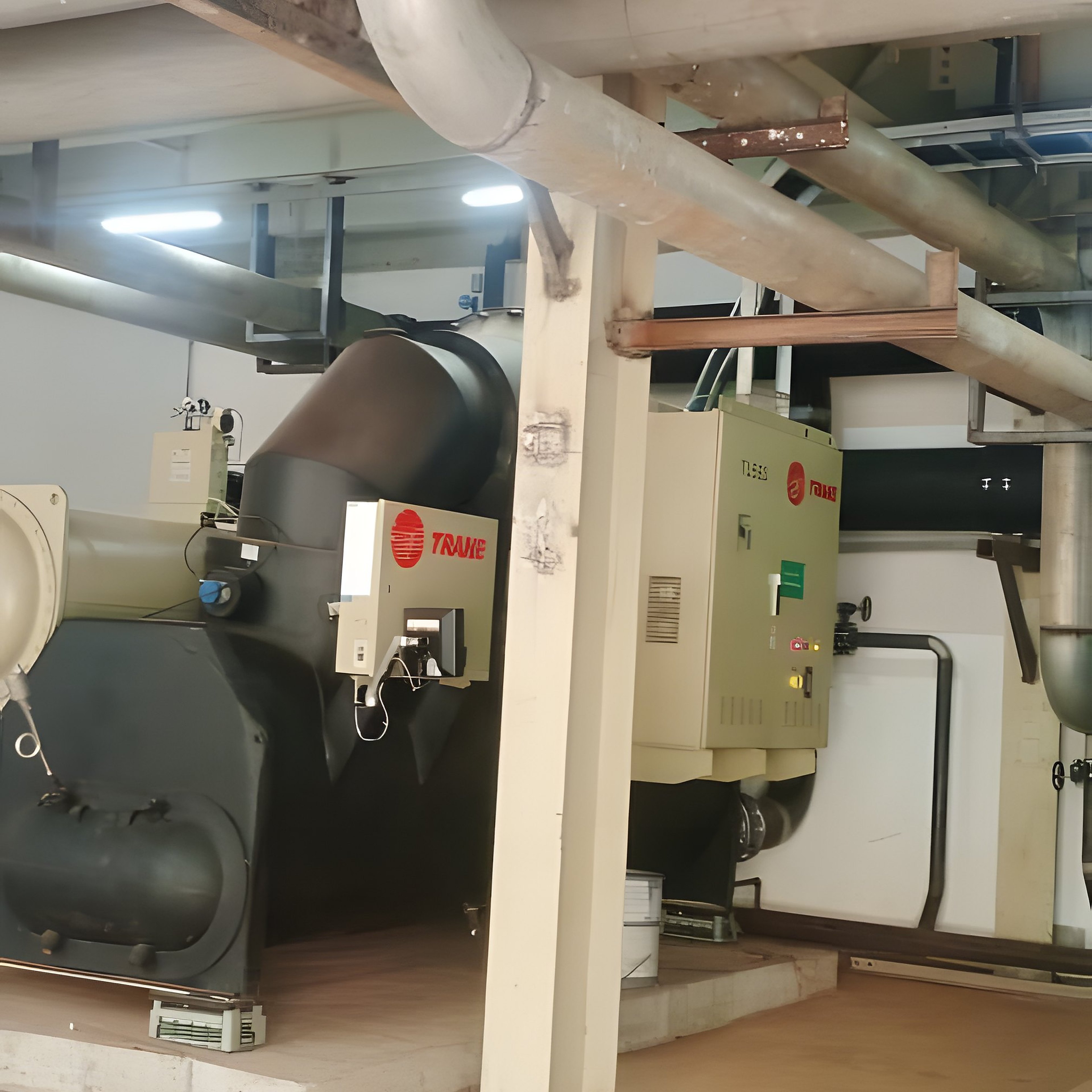
However, every chiller also has to reject the heat it removes. An air cooled chiller blows it into the outside air. A water cooled chiller passes it to condenser water, and a cooling tower then releases it.
Which type of chiller should you choose?
The choice depends on capacity, water supply, space and available energy.
| Type | How it rejects heat | Strengths | Limits |
|---|---|---|---|
| Air cooled | Fans and coils outdoors | Simple, no cooling tower, less water | Higher power use, needs open air space |
| Water cooled | Condenser water and cooling tower | More efficient, longer life, quieter plant | Needs tower, pumps and water treatment |
| Absorption | Uses heat instead of a compressor | Runs on steam, hot water or waste heat | Larger, needs careful vacuum and water care |
As a rule, air cooled units suit small and medium loads, or sites where water is scarce. Water cooled units suit larger loads, because they use less electricity per unit of cooling.
Absorption chillers deserve a mention in Nigeria. They use heat to drive the cooling cycle. So a plant with spare steam, or waste heat from a generator or boiler, can produce chilled water with very little electricity. Maven Technical Services is the appointed partner of Thermax for the installation and maintenance of boilers and chillers.
How do you size the chiller?
Capacity comes from the cooling load, not from the size of the old machine. Engineers express it in kilowatts or tons of refrigeration.
First, list every load: the process, the building, people, lights and machines. Next, note when each one peaks. Then allow for the local climate, which affects both the load and the chiller’s own output.
Avoid heavy oversizing. A chiller that is too large cycles on and off and runs inefficiently at low load. On the other hand, a chiller that is too small never reaches temperature on the hottest days. Where the load varies widely, two smaller machines often serve better than one large one. They also give standby cover.
Plant room layout for chiller installation
Good layout makes chiller installation easier and maintenance possible. So plan it on drawings before anything arrives.
- Access. Check the route from the gate to the plinth. A chiller is heavy, and it may need a crane or skates.
- Service clearances. Leave space to pull condenser and evaporator tubes, which can need the full length of the machine.
- Airflow. Air cooled chillers need free air on all sides and above. Recirculated hot air cuts capacity sharply.
- Structure. Confirm that the floor or roof can carry the operating weight, including water.
- Drainage. Provide floor drains for leaks, cleaning and tube washing.
- Noise. Keep noisy plant away from offices and neighbours, or add acoustic treatment.
- Ventilation. Plant rooms need fresh air, and refrigerant rules may require leak detection.
Foundations, lifting and vibration
First, the chiller sits on a level concrete plinth. The maker’s drawing gives the load points. Therefore, cast the plinth to that drawing and let it cure fully.
Lifting needs a plan. Use the lifting points the manufacturer provides, with spreader beams where required. After that, set the machine on anti-vibration mounts and level it.
In addition, flexible connectors on the pipes stop vibration from travelling into the building. Pipe supports near the chiller should carry the pipe weight, so that the nozzles carry none.
Chilled water piping in a chiller installation
Piping is the largest part of most projects. In fact, it decides whether the chiller can deliver its rated output.
Materials. Most plants use carbon steel pipe with welded or grooved joints. Some smaller lines use other materials, depending on the specification.
Sizing. Designers size pipes for a sensible water velocity. Small pipes cause high pressure drop and noise. Oversized pipes simply waste money.
Key components. Each chiller needs isolation valves, a strainer, a flow switch, flexible connectors, gauges and thermometers. In addition, the system needs air vents at high points and drains at low points.
Welding and testing. Qualified welders should make the joints. Then the team pressure tests the system before anyone insulates it. Our guide to hydrostatic testing explains the method.
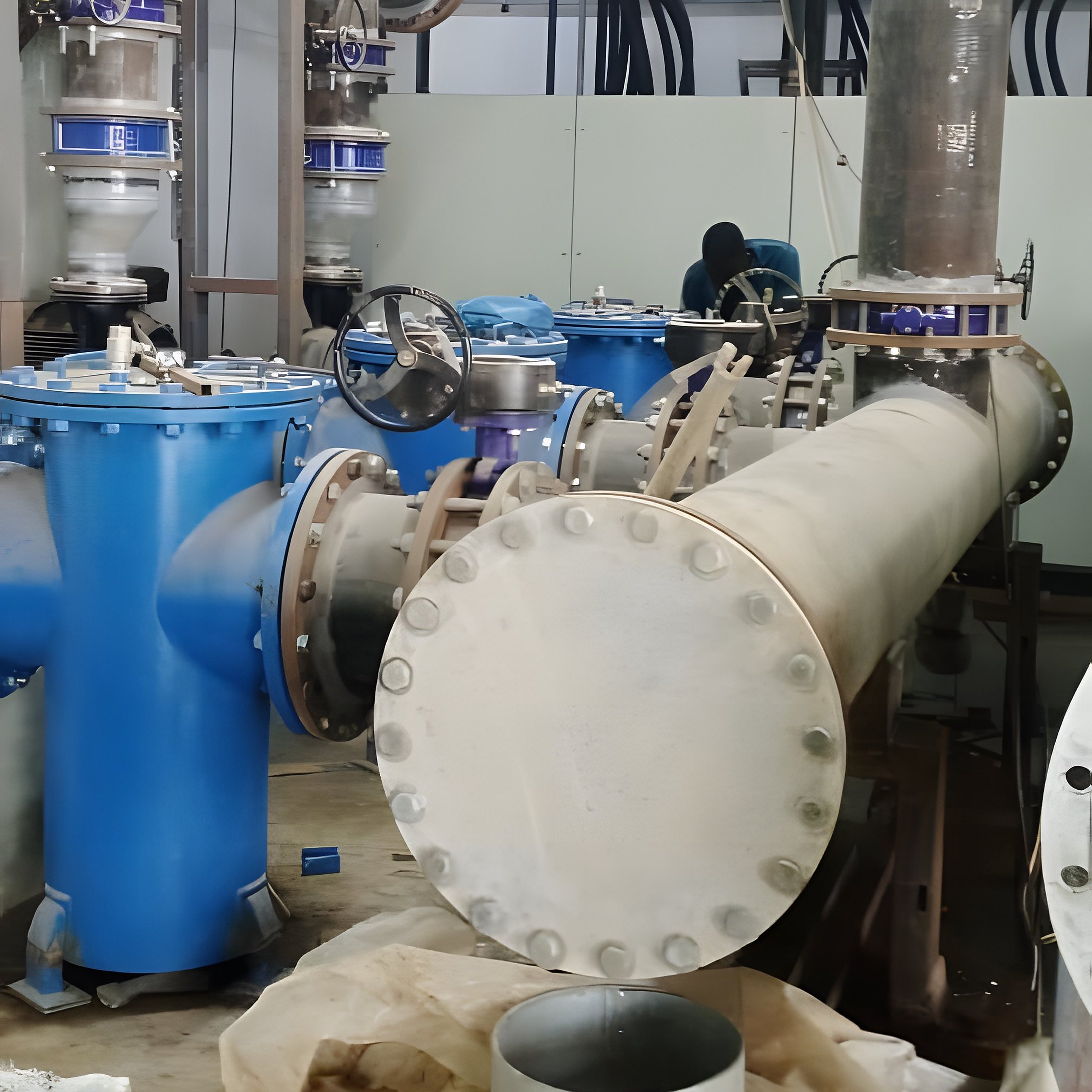
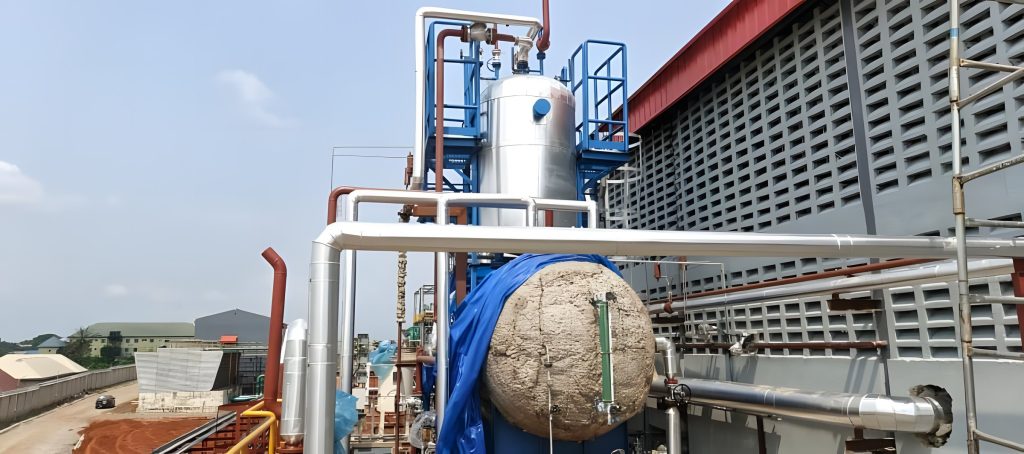
Insulation. Chilled pipes sit below the dew point of the air. So moisture will condense on any bare metal. The insulation must have a sealed vapour barrier, with every joint taped. Otherwise, the pipe drips, the insulation soaks and the steel corrodes underneath. We cover materials in our guide to industrial pipe insulation and cladding.
Pumps and the pump room
Pumps move chilled water around the system. For that reason, most plants fit duty and standby pumps, so that one failure does not stop cooling.
Larger systems often use a primary and secondary arrangement. Primary pumps keep a steady flow through the chillers. Secondary pumps, usually with variable speed drives, send water to the loads as demand changes. This saves a good deal of pump energy.
In most cases, the pump room also holds the expansion vessel, the air separator, the make-up connection and the chemical dosing pot. Lay it out so that every valve and strainer is easy to reach. You can see an example in our chiller plant and pump room project.
The condenser side
A water cooled chiller needs a second water circuit. Condenser pumps send warm water to the cooling tower, and cooled water returns to the chiller.
First, the tower needs a firm base, clean make-up water and good airflow. It also needs water treatment. Without it, scale and biological growth foul the condenser tubes within months. As a result, power use rises and capacity falls.
Electrical work and controls
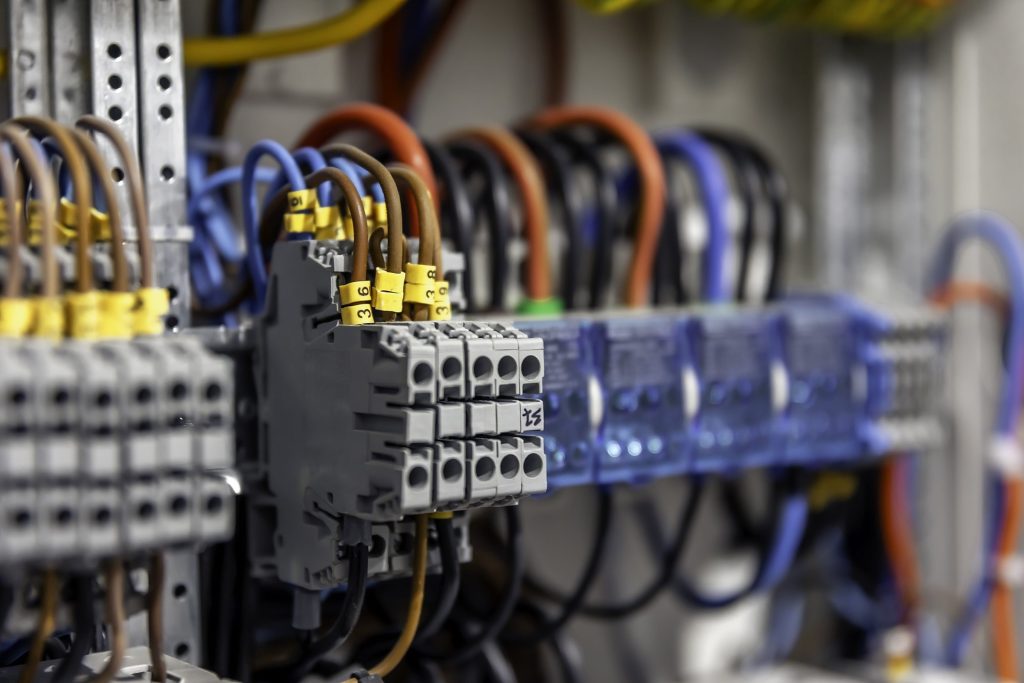
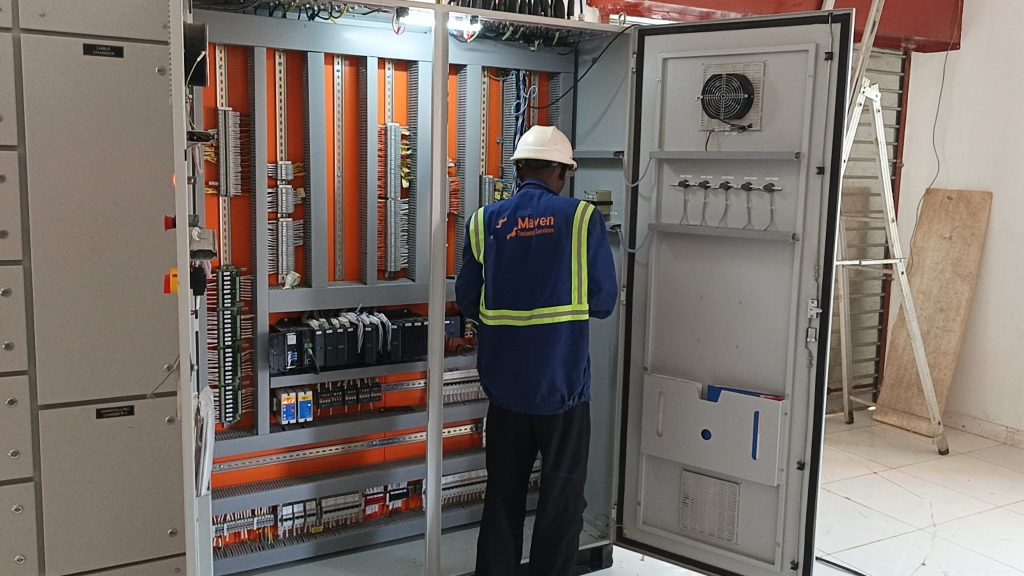
Chillers draw a heavy current. Therefore, check the supply, the cable sizes and the starting method early. On sites that depend on generators, confirm that the generator can start the compressor.
Controls protect the machine. For example, flow switches stop the chiller if the water stops moving. Interlocks make sure that pumps and tower fans run before the compressor starts. On larger sites, a building management system or a PLC sequences several chillers to match the load.
Flushing and cleaning
New pipework contains welding scale, rust and dirt. If that debris reaches the chiller, it blocks strainers and damages tubes.
So flush the system before you open the chiller valves. First, circulate water through a bypass around the chiller. Then clean the strainers repeatedly until the water runs clear. After that, add corrosion inhibitor and, for closed loops, test the water quality.
Commissioning a chiller installation
Commissioning is the last stage of a chiller installation, and it proves that the system works as designed. Normally, the manufacturer’s engineer or an approved partner starts the chiller.
The main steps are:
- confirm pressure tests, flushing and electrical tests are complete
- check rotation and alignment of pumps
- set and balance water flow rates
- check safety devices and interlocks
- start the chiller and record temperatures, pressures and currents
- run the system at load and compare results with the design
- train the operators and hand over the documents
Finally, the handover pack should include drawings, test certificates, commissioning records and manuals. ASHRAE publishes widely used standards for chilled water system design and commissioning.
Which mistakes should you avoid?
- choosing the chiller on purchase price alone
- blocking airflow around air cooled units
- leaving no space to pull tubes
- insulating pipes before the pressure test
- breaking the vapour barrier at supports and valves
- skipping the flush
- ignoring water treatment
- running the chiller with no flow protection
What maintenance follows a chiller installation?
A chiller needs regular care to hold its efficiency. First, operators should log temperatures and pressures daily. In addition, technicians should clean condenser tubes or coils, check refrigerant charge and oil, test safeties and check water treatment on a schedule.
Dirty condenser surfaces are the most common cause of high power use. So clean them before the hot season, not after a trip.
Frequently asked questions about chiller installation
How long does a chiller installation take?
A single packaged chiller with short pipe runs can take two to four weeks on site. Larger plant rooms with several chillers, towers and long pipe routes take several months.
Which is better, an air cooled or a water cooled chiller?
Water cooled chillers are more efficient and suit large loads. Air cooled chillers are simpler and need little water, so they suit smaller loads and sites with limited water.
Can a chiller run on steam or waste heat?
Yes. An absorption chiller uses steam, hot water or exhaust heat to drive the cooling cycle. It suits plants with spare heat and costly electricity.
Why is my new chiller not reaching temperature?
Common causes are low water flow, air in the system, blocked strainers, poor airflow at the condenser or a load larger than the design.
Plan the whole system, not just the machine
A successful chiller installation depends on sizing, layout, piping, water quality and commissioning. Each one matters as much as the chiller itself.
Maven Technical Services installs chillers, chilled water piping, pump rooms and HVAC systems across Nigeria. Send us your cooling load and site details, and our engineers will reply with a method, a schedule and a price.