In this article
- What is boiler efficiency?
- Where do boiler efficiency losses come from?
- Step 1: Measure before you change anything
- Step 2: Tune the burner
- Step 3: Keep the fire side clean
- Step 4: Keep the water side clean
- Step 5: How does feed water temperature affect boiler efficiency?
- Step 6: Return your condensate
- Step 7: Fit an economiser
- Step 8: Control blowdown
- Step 9: Insulate every hot surface
- Step 10: Look after steam traps and leaks
- Step 11: Match the boiler to the load
- Step 12: Cut steam demand at the point of use
- Which steps improve boiler efficiency fastest?
- How do you keep the gains?
- Frequently asked questions about boiler efficiency
- Start with a survey
Boiler efficiency is the share of the fuel’s energy that ends up as useful steam. Most industrial boilers lose 15 to 25 percent of that energy, mainly up the chimney. You can win a good part of it back with careful tuning, clean heating surfaces, hot feed water and good insulation.
None of this needs exotic technology. Instead, it needs measurement and routine. This guide sets out twelve steps that work in real plants. We see them pay back again and again in the boiler houses we install and maintain across Nigeria.
What is boiler efficiency?
Engineers use two main measures. Combustion efficiency shows how well the burner turns fuel into heat. Overall boiler efficiency shows how much of the fuel’s energy leaves as steam.
A modern gas or oil boiler in good order reaches 85 to 90 percent or more with an economiser. A neglected one can fall below 75 percent. The gap is pure fuel cost. For example, a plant that lifts boiler efficiency from 78 to 86 percent cuts its fuel bill by roughly nine percent.
Where do boiler efficiency losses come from?
Before you fix losses, you need to know them. The table shows the usual ones.
| Loss | Typical cause | Main fix |
|---|---|---|
| Flue gas loss | Hot gas and excess air leaving the chimney | Burner tuning, clean tubes, economiser |
| Blowdown loss | Hot water drained to control solids | Better water treatment, blowdown control |
| Radiation loss | Heat leaving the hot shell | Good insulation, steady high load |
| Cycling loss | Burner starting and stopping | Correct sizing, modulating burner |
| Distribution loss | Bare pipes, leaks, failed traps | Insulation, trap surveys, leak repair |
| Lost condensate | Hot water sent to drain | Condensate return |
The flue gas loss is the largest by far. So start there.
Step 1: Measure before you change anything
You cannot manage what you do not measure. First, fit or check meters for fuel, feed water and, if possible, steam. Then record flue gas temperature and oxygen with an analyser.
With these numbers, you can calculate boiler efficiency and track it over time. Without them, every saving is a guess.
Step 2: Tune the burner
A burner needs a little more air than the fuel strictly requires. Too little air makes soot and carbon monoxide. Too much air carries heat straight up the chimney.
A technician with a flue gas analyser can set the right air to fuel ratio across the firing range. Repeat the tuning at least once a year, and after any burner work. As a rule of thumb, cutting excess air by 15 percentage points improves efficiency by about one percent.
Step 3: Keep the fire side clean
Soot is an insulator. Even a thin layer on the tubes blocks heat transfer. As a result, the flue gas leaves hotter and takes energy with it.
Watch the flue gas temperature. When it rises 20 degrees or more above the clean value at the same load, clean the tubes. Plants that burn furnace oil or biomass need to clean far more often than gas users.
Step 4: Keep the water side clean
Scale does the same damage from the other side. Hard water leaves deposits on the hot metal. Then the metal overheats and fuel use climbs.
Good water treatment stops scale before it forms. That means working softeners, correct chemical dosing and daily tests. Our boiler water treatment guide explains the routine.
Step 5: How does feed water temperature affect boiler efficiency?
Hot feed water needs less fuel to turn into steam. In fact, every six degrees Celsius of extra feed water temperature saves about one percent of fuel.
There are three good ways to raise it. First, return more condensate. Second, use a deaerator or a heated feed tank. Third, fit an economiser. Hot feed water also drives off oxygen, so it protects the boiler from corrosion.
Step 6: Return your condensate
Condensate is distilled water that still holds a lot of heat. When a plant dumps it, the fuel, the water and the treatment chemicals all go down the drain together.
So collect condensate from heaters, coils and jackets, and pump it back to the feed tank. In many plants, this single step gives the fastest payback of all. Insulate the return lines as well, or the heat will escape on the way.
Step 7: Fit an economiser
An economiser is a heat exchanger in the flue. It uses hot exhaust gas to warm the feed water. Typically, it improves boiler efficiency by four to six percent.
It suits boilers that run for long hours at a steady load. On small or lightly loaded boilers, the payback is slower. Also check the fuel, because sulphur in furnace oil can cause corrosion if the gas gets too cool.
Step 8: Control blowdown
Blowdown removes dissolved solids from the boiler water. It is essential. However, too much blowdown throws away hot, treated water.
Manual blowdown is often excessive, because operators play safe. An automatic system measures conductivity and opens the valve only when needed. On larger boilers, a flash vessel and heat exchanger can recover heat from the blowdown as well.
Step 9: Insulate every hot surface
Bare steam pipes waste a surprising amount of fuel. A single metre of uninsulated pipe can lose as much heat as a small room heater, all year round.
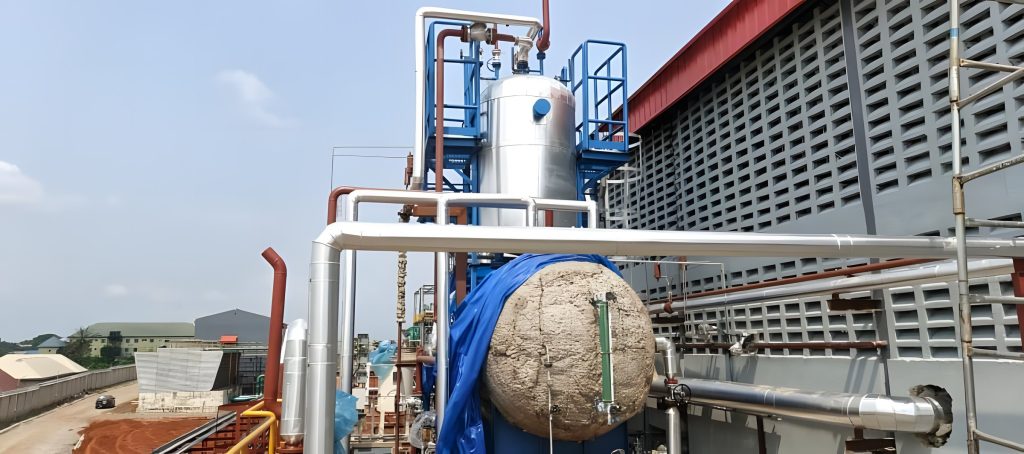
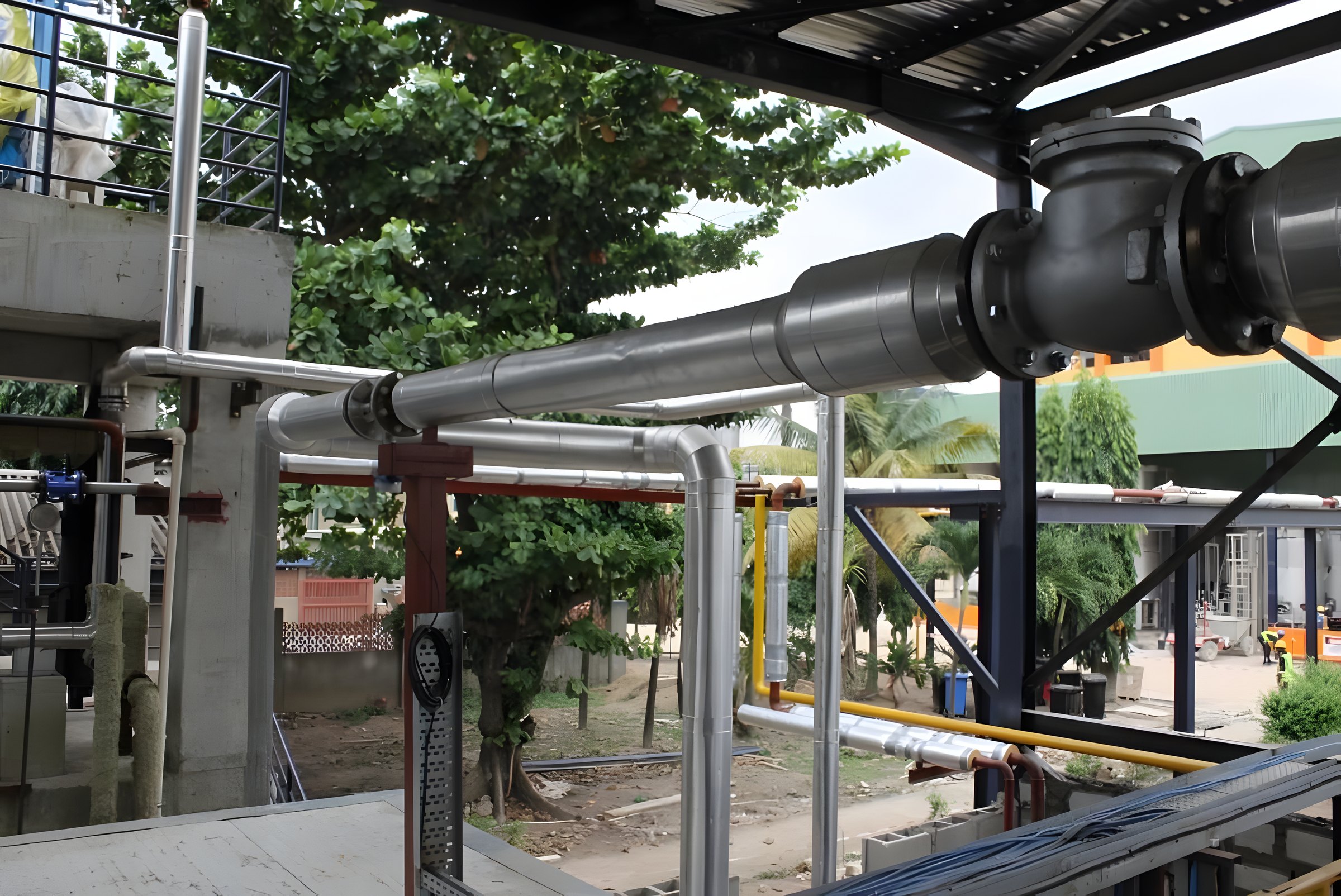
Therefore, insulate pipes, valves, flanges, headers and tanks. Then protect the insulation with cladding, because wet insulation does not work. Removable jackets suit valves and flanges that need access. We cover the details in our guide to industrial pipe insulation and cladding.
Step 10: Look after steam traps and leaks
Steam traps remove condensate without letting steam escape. When a trap fails open, live steam blows through to drain. When it fails shut, equipment floods and heats poorly.
In a plant with no trap routine, a large share of traps may be faulty at any time. So survey them at least twice a year and repair what you find. Fix steam leaks promptly too. A small hissing leak wastes fuel every hour of every day.
Step 11: Match the boiler to the load
A boiler works best at a steady, fairly high load. By contrast, a large boiler serving a small load cycles on and off. Each start purges the furnace with cold air, which wastes heat.
Several fixes help. A modulating burner follows the load smoothly. In a multi-boiler plant, run the fewest boilers that meet the demand. When you replace a boiler, size it to the measured load, not to a guess. Our guide to industrial boiler installation in Nigeria explains how to size correctly.
Step 12: Cut steam demand at the point of use
The cheapest steam is the steam you never make. So look at the process as well as the boiler.
- Use steam at the lowest pressure that does the job.
- Shut off steam to idle equipment.
- Fix temperature controls that overheat the product.
- Recover flash steam for low pressure heating.
- Cover open hot tanks.
Often, these changes cost very little. Yet together they can match the savings from work on the boiler itself.
Which steps improve boiler efficiency fastest?
Start with the cheap, quick wins. Burner tuning, tube cleaning, leak repair and trap repair cost little and pay back in weeks. After that, look at insulation and condensate return, which usually pay back within a year.
Economisers, blowdown heat recovery and new burners need more capital. Even so, they often repay within two or three years on a boiler that runs long hours. The US Department of Energy publishes free steam tip sheets that help you estimate each saving.
How do you keep the gains?
Efficiency drifts. Burners go out of tune, tubes foul and traps fail. Therefore, build the checks into a routine.
Log flue gas temperature, oxygen, feed water temperature and fuel use every day. Then review the trend each month. When a number moves, find out why. Our boiler maintenance checklist gives a full routine that you can adapt.
Frequently asked questions about boiler efficiency
What is a good boiler efficiency?
For a gas or oil fired industrial boiler, 85 percent or more is good, and over 90 percent is possible with an economiser. Biomass boilers usually run a little lower.
What is the biggest loss in a boiler?
The flue gas loss is the biggest. Hot gas and excess air leave through the chimney and carry heat with them. That is why burner tuning and clean tubes matter so much.
Does descaling improve boiler efficiency?
Yes. Scale insulates the metal, so the boiler burns more fuel for the same steam. Removing it restores heat transfer, and good water treatment stops it returning.
How often should a burner be tuned?
Tune it at least once a year, and after any repair or fuel change. Plants with heavy use often tune every six months.
Start with a survey
Better boiler efficiency begins with facts. A short survey of the boiler house and the steam system will show where the fuel goes and which steps pay back first.
Maven Technical Services carries out boiler servicing, burner tuning, insulation, condensate systems and economiser installation across Nigeria. Ask our engineers for a boiler house survey, or see the plants we have built on our projects page.