In this article
- Who Mantrac is
- Why generators go in containers
- What goes into generator container fabrication
- Piping and installation for CAT generator sets
- Ventilation: the hardest part of generator container fabrication
- Sound control in generator container fabrication
- Corrosion protection
- Why fabrication quality matters for a generator
- Checks before a container leaves the workshop
- Our fabrication workshop
- Planning a generator container fabrication project
- Beyond generators
- Talk to us
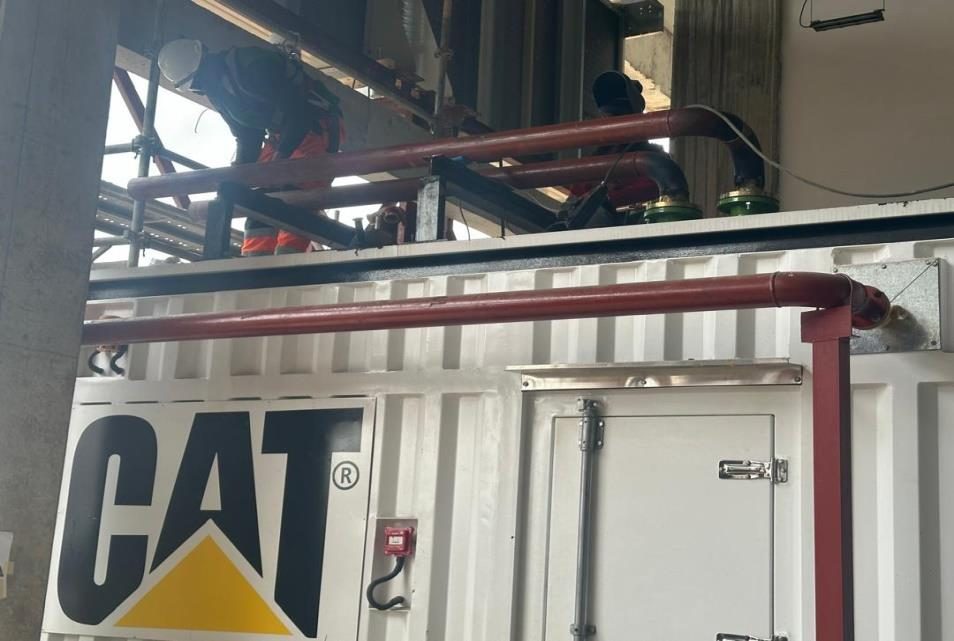
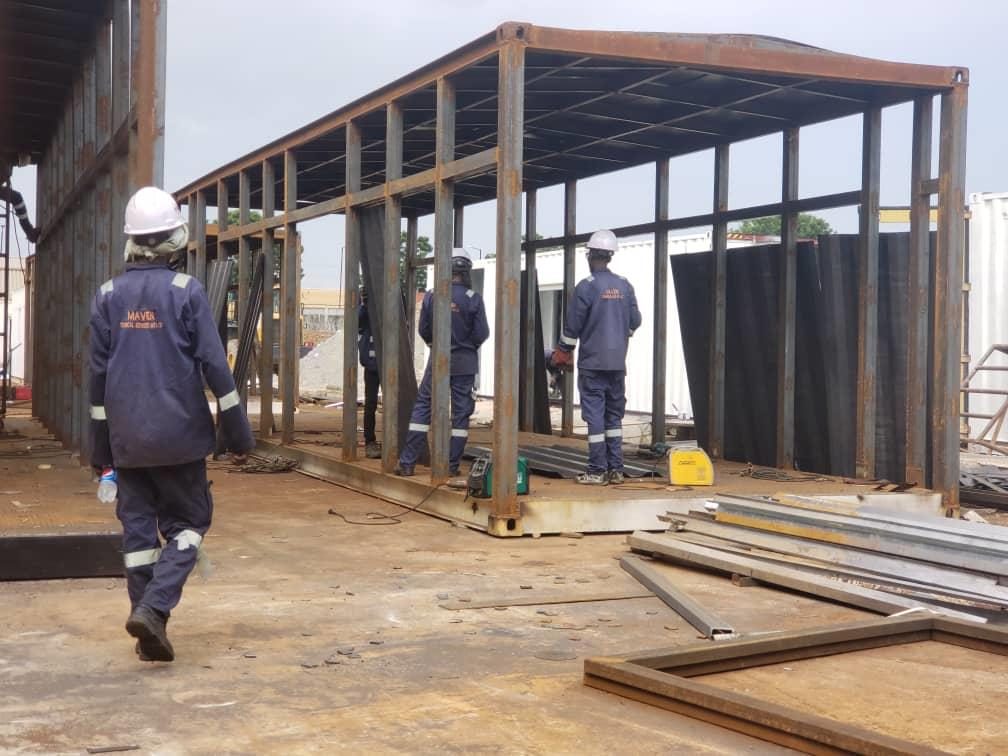
Power generation in Nigeria depends heavily on generator sets. Yet for large units, the container they sit in matters almost as much as the engine. We have carried out generator container fabrication for Mantrac Nigeria Limited, the Caterpillar dealer, along with piping and installation work for CAT generator sets at their sites in Oregun and Epe, Lagos.
This post covers that work and explains what goes into a good generator container, from steel and ventilation to fuel piping and sound control.
Who Mantrac is
For context, Mantrac Nigeria supplies and supports Caterpillar equipment, including generator sets used across the country for prime and standby power. When a dealer of that standing needs fabrication and piping, the quality bar is high. The finished product carries their name and protects equipment worth a great deal.
Why generators go in containers
A large generator set can sit in a building, under a canopy or inside a container. However, containers are the most popular choice, and for good reasons.
They protect the equipment. After all, rain, dust, sun and theft are all real risks. A steel container keeps them out.
They reduce noise. Also, with acoustic lining and silencers, a container cuts the noise that reaches neighbours and workers.
They are portable. In practice, a generator in a container can be lifted, trucked and placed on a prepared base. So it can move between sites as needs change.
They save building costs. That is, instead of constructing a powerhouse, a plant can place a container on a simple foundation.
For these reasons, generator container fabrication is a regular part of power projects in Nigeria.
What goes into generator container fabrication
However, a good generator container is far more than a steel box. In fact, each part has a job.
Base frame. First, the generator sits on a heavy base frame, often with a built-in fuel tank below. So the frame must be rigid, flat and strong enough to carry the engine and alternator without flexing.
Walls and roof. Next, the shell keeps the weather out and also supports the acoustic lining. For that reason, every seam needs sealing, and the roof must shed rain.
Doors. Meanwhile, operators and technicians need access for checks, servicing and repairs. Doors must seal well, lock securely and open wide enough for parts to pass.
Ventilation. A running generator produces a great deal of heat. So air must flow in, across the engine and out through the radiator. If airflow is poor, the engine overheats and output drops.
Acoustic treatment. In addition, sound-absorbing panels and attenuators on the air inlets and outlets reduce noise while still letting air move.
Exhaust system. Finally, a silencer, flexible connector and exhaust pipe carry hot gas safely out of the container, usually above the roof.
Piping and installation for CAT generator sets
Alongside the containers, we carried out piping and installation work for CAT generator sets. On generator projects, the piping usually covers fuel supply and return, exhaust, and sometimes cooling or drain lines.
Fuel piping. First, diesel must reach the engine clean and at the right pressure. Supply and return lines need good routing, proper supports and leak-free joints. Filters and valves must be easy to reach for servicing.
Exhaust piping. Second, exhaust runs hot and vibrates. So it needs flexible connections, heat-resistant supports and insulation where people might touch it. It must also discharge where fumes will not re-enter the container or nearby buildings.
Drains. Lastly, oil and coolant drains let technicians service the set without spilling fluids on the ground.
Ventilation: the hardest part of generator container fabrication
Ventilation is where many generator containers fail in Nigeria. Designs made for cooler countries often do not move enough air for Lagos heat and humidity.
The rule is simple. After all, every kilowatt the generator produces creates heat, and the container must get rid of it. If the air inside gets too hot, the engine derates. In other words, it produces less power to protect itself. In the worst case, it shuts down.
Good generator container fabrication plans the airflow path carefully. Air enters at the alternator end, passes over the engine and leaves through the radiator. Inlets and outlets must be large enough, and hot exhaust air must not loop back into the inlet. We check these details on every container we build.
Sound control in generator container fabrication
Meanwhile, noise limits are getting stricter, especially near homes, offices and hospitals. Acoustic containers reduce noise with lined walls, sealed doors and attenuators on the air paths.
However, attenuators restrict airflow. Too much restriction brings back the overheating problem. So the design has to balance noise and airflow. That balance is a matter of engineering, not guesswork.
Corrosion protection
Lagos is coastal, humid and often salty in the air. As a result, bare steel rusts fast. Therefore, surface preparation and coatings are essential in generator container fabrication.
We prepare steel properly, then apply primer and finish coats suited to the environment. In particular, welds and edges get extra attention, because corrosion usually starts there. Where possible, we also design out water traps, so rain drains away instead of pooling on the steel.
Why fabrication quality matters for a generator
Of course, a generator is a large investment, and it often supplies critical power. For example, a leaking container lets water reach the alternator. Likewise, a flexing frame spoils alignment, and a cracked exhaust lets fumes into the enclosure. Any of these can lead to costly downtime.
On the other hand, good welding, square frames, sealed seams and sound coatings prevent these problems. That is why a dealer like Mantrac cares about who builds their containers.
Checks before a container leaves the workshop
Every container we build goes through a set of checks before it travels. Finding a problem in the workshop costs minutes. Finding it on site, by contrast, can cost days.
Dimensions and squareness. First, we measure the frame diagonals and the mounting points. If the frame is out of square, the generator will not sit true, so we correct it before anything else happens.
Weld inspection. Next, we inspect structural welds visually and, where the design calls for it, with further testing. Lifting points in particular must be sound, because the whole container hangs from them.
Water tightness. Then we check seams, door seals and roof joints. A simple water test shows any leak long before the first rain on site does.
Doors and hardware. After that, we open and close every door, check hinges and locks, and confirm that seals compress evenly.
Coatings. We also check paint thickness and look for runs, holidays and missed edges. Where the coating is thin, we repair it straight away.
Fuel tank integrity. Finally, if the base holds a fuel tank, we test it for leaks. A leaking diesel tank is a fire risk and an environmental problem, so this test is never optional.
Only when every check passes does the container leave for site. As a result, the installation team can focus on setting the generator, not fixing the enclosure.
Our fabrication workshop
Maven runs its own fabrication workshop in Lagos. There, our certified welders build structural steel, ducting, tanks, chimneys, pressure vessels and enclosures. Working in a workshop rather than on site gives better control over quality, fit and finish.
For generator container fabrication, that control matters. Frames stay square, panels fit cleanly and coatings go on in the right conditions. Then the finished container goes to site ready for the generator.
Planning a generator container fabrication project
If you are specifying a generator container, these questions help you get it right:
- What is the generator’s rating and duty? Prime and standby duties affect ventilation and fuel storage.
- How much fuel storage do you need? A base tank sets how long the set can run between refills.
- What noise limit applies? This decides the level of acoustic treatment.
- Where will it sit? Access, foundations and nearby buildings affect exhaust and airflow design.
- Will it move? Portable containers need lifting points and a frame strong enough for transport.
- Who will maintain it? Door positions and internal space should suit servicing.
Clear answers at the start lead to a container that performs well for many years.
Beyond generators
Of course, the skills behind generator container fabrication carry over to many other jobs. Enclosures for pumps, compressors and control panels use the same principles: a strong frame, a sealed shell, good ventilation and durable coatings.
We also fabricate chimneys, ducting, tanks, headers and structural steel for boiler and process plants. You can see examples on our projects page, including work from our Lagos workshop.
Talk to us
You can view photographs from this project on the Mantrac project page.
Maven Technical Services has delivered engineering, fabrication and installation work across Nigeria and West Africa since 2009. If you need generator container fabrication, fuel piping or any power-related steelwork, send us your scope. We will reply with a clear method, schedule and price. You can also read more about our company.