In this article
- Why stainless steel
- Choosing the right grade
- What makes stainless steel process piping sanitary
- Welding stainless steel process piping
- Cleaning in place
- Supports and layout for stainless steel process piping
- Installing on a live factory floor
- Testing and commissioning
- Common mistakes in stainless steel process piping
- Budgeting for stainless steel process piping
- Beyond product lines
- Planning your next process line
- Talk to us
In a food or beverage plant, the pipework touches the product. Juice, milk, syrup, water and beer all pass through it on their way to the bottle, carton or sachet. So the pipe must be clean, smooth and easy to sanitise, every single day. That is why stainless steel process piping is the standard in the industry.
We weld and install sanitary stainless steel process lines for beverage and food producers, often on live factory floors. This guide explains what good work looks like, from material choice to welding, drainage and cleaning.
Why stainless steel
Stainless steel resists corrosion, handles a wide range of temperatures and does not taint the product. It is also strong, long-lasting and easy to clean. As a result, food safety authorities and equipment makers around the world expect it for product contact surfaces.
The key is a thin, invisible layer on the surface, formed by chromium in the alloy. This passive layer protects the steel from corrosion. If poor welding or contamination damages it, corrosion can start. So much of the skill in stainless steel process piping lies in protecting that layer.
Choosing the right grade
Two grades cover most food and beverage work.
Grade 304. First, 304 is the everyday choice for many product and water lines. It resists most food products and cleaning chemicals well.
Grade 316. Next, 316 contains molybdenum, which improves resistance to chlorides and acids. So it suits salty products, acidic juices, some dairy duties and aggressive cleaning regimes.
Low carbon versions, often marked “L”, reduce the risk of corrosion near welds. For welded sanitary systems, they are usually the safer choice.
Choosing the grade depends on the product, the cleaning chemicals, temperatures and the plant’s own standards. In short, spending a little more on the right grade avoids early failures. It also keeps the plant in step with its quality audits, because auditors increasingly ask for material certificates on every product contact line. Keeping those certificates on file from day one saves a scramble later.
What makes stainless steel process piping sanitary
Sanitary piping is designed so bacteria have nowhere to hide. Several details make that possible.
Smooth surfaces. Fabricators polish product contact surfaces to a specified finish. Rough surfaces trap residue and bacteria.
Smooth welds. Inside the pipe, welds must be flush and fully penetrated, with no crevices, lumps or discolouration.
No dead legs. Designers avoid short, stagnant branches where product sits still, or keep them very short. Otherwise, product lingers there and spoils.
Full drainage. Lines must slope so they drain completely after production and cleaning.
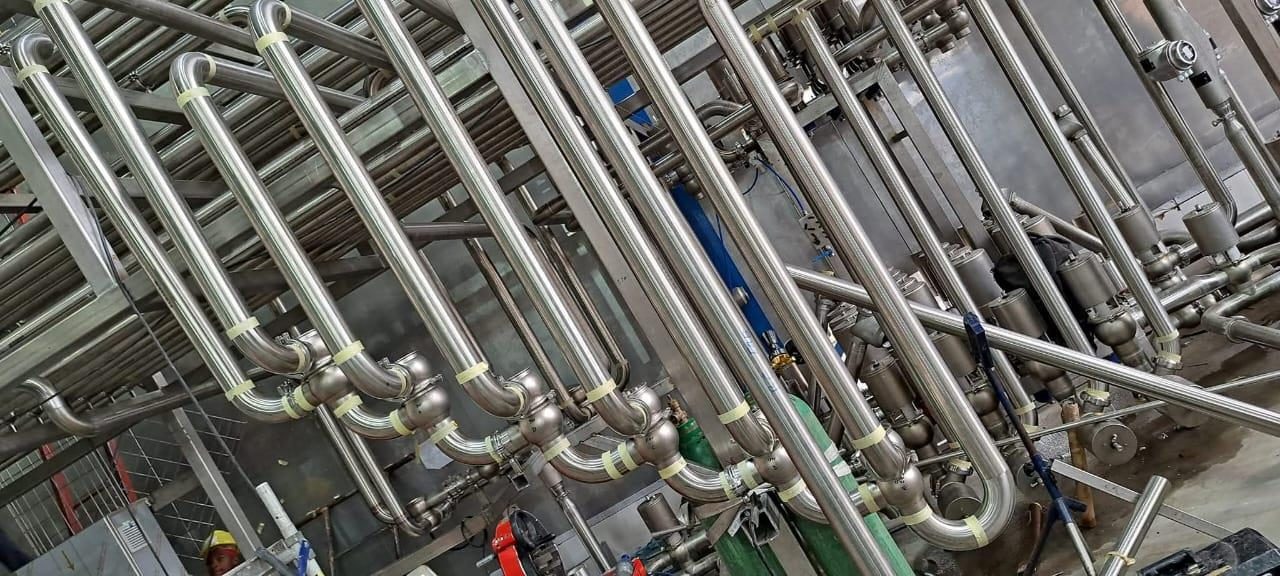
Sanitary fittings. Clamp fittings, sanitary valves and hygienic gaskets replace threaded joints, which trap dirt.
When all of these come together, the plant can clean the system reliably and inspect it with confidence.
Welding stainless steel process piping
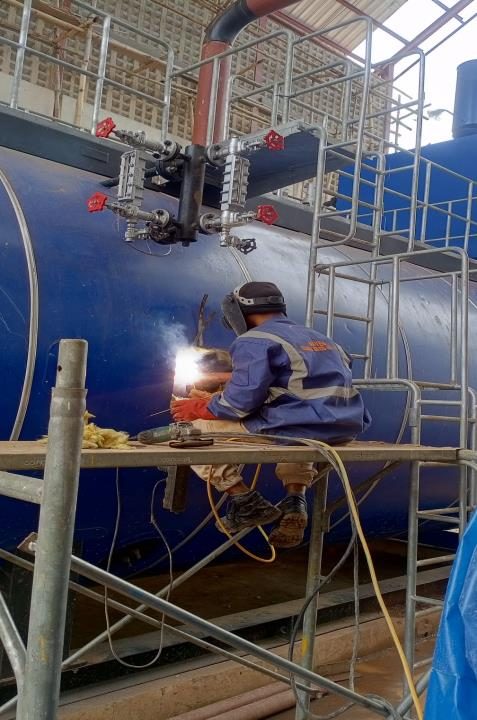
Welding is where sanitary systems succeed or fail. Most sanitary welds use TIG welding, and often orbital welding for consistent results.
Back purging. During welding, the welder fills the inside of the pipe with an inert gas, usually argon. This stops oxygen reaching the hot metal. Without it, the inside of the weld oxidises, turns dark and rough, and loses its corrosion resistance.
Fit-up. Pipe ends must be cut square, cleaned and aligned closely. Small gaps or misalignment leave ledges inside the pipe.
Clean tools. Tools used on carbon steel must never touch stainless. Carbon steel particles embedded in stainless cause rust spots.
Inspection. Finally, an inspector checks each weld, often with a borescope inside the pipe, to confirm full penetration and a clean, bright finish.
Cleaning in place
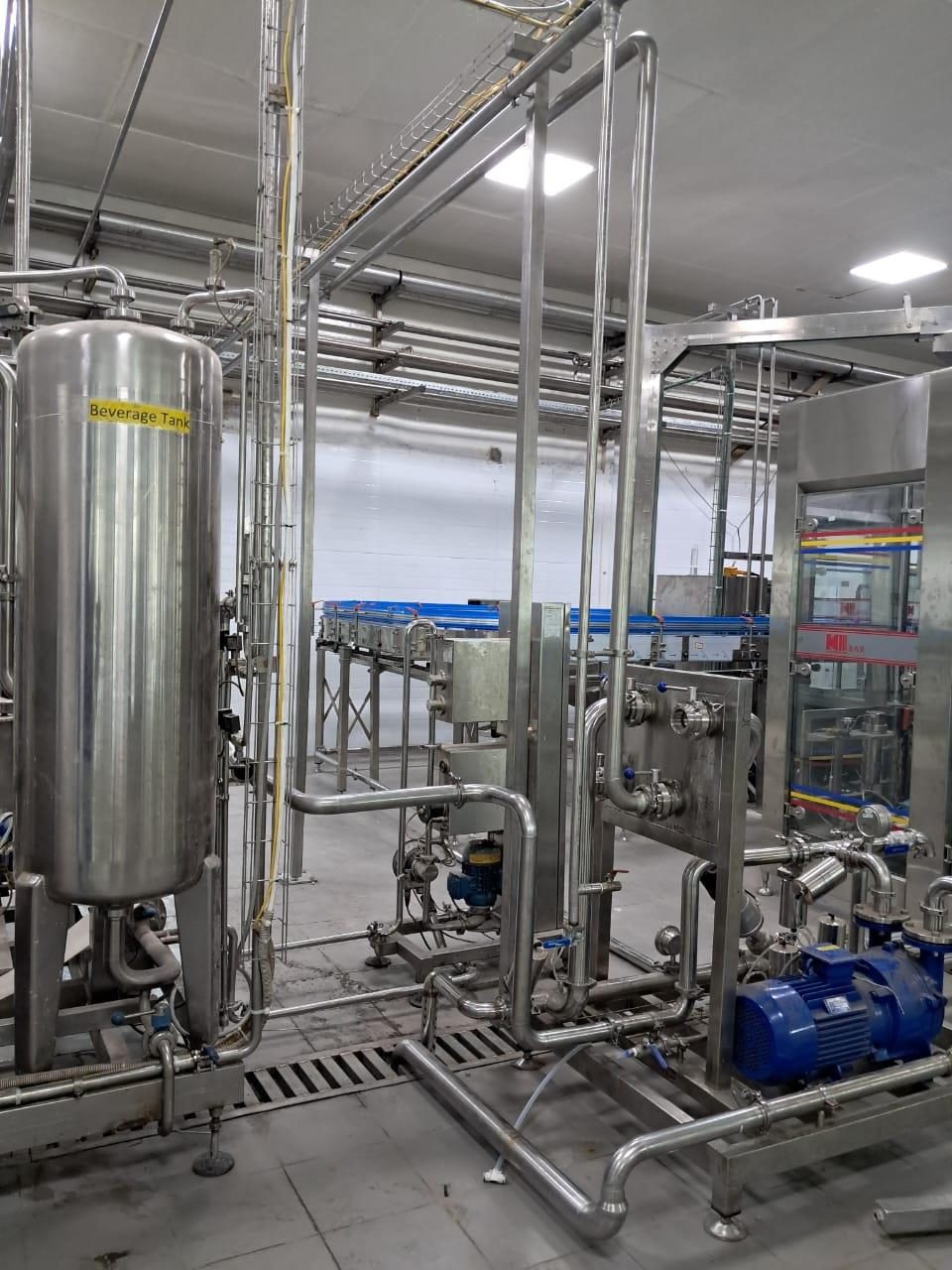
Most modern plants clean their process lines without taking them apart. This is called cleaning in place, or CIP. Hot water, detergent and sanitiser circulate through the lines at set temperatures, flows and times.
For CIP to work, the pipework must be designed for it. Flow must be fast enough to scour surfaces. Every part of the line must be reached by the cleaning solution. And lines must drain fully afterwards.
So when we install stainless steel process piping, we plan for CIP from the start. That includes slopes, drain points, spray devices in tanks and return routes for cleaning solutions.
Supports and layout for stainless steel process piping
Stainless lines need good support, just like any other pipe. However, supports in food areas must also be hygienic. Open, easy-to-clean supports are better than enclosed ones that collect dirt.
Layout matters too. Lines should be accessible for inspection and maintenance. They should also keep clear of walls and floors enough for cleaning underneath. Grouping lines neatly on racks makes the plant easier to clean and easier to understand.
Installing on a live factory floor
Many of our process piping jobs happen in plants that keep producing. That changes how we work.
Planning around production. We agree work areas and times with the production team, so we do not disrupt filling lines or packaging.
Protecting product. Grinding, cutting and welding create dust and fumes. So we screen off work areas and clean up thoroughly before production resumes nearby.
Prefabrication. Where possible, we build spools in our workshop, then bring them to site ready to install. That reduces hot work on the factory floor.
Hygiene rules. Our crews follow the client’s hygiene rules, including clothing, hand washing and controlled access to production areas.
Testing and commissioning
Before stainless steel process piping carries product, it must be tested and cleaned.
- Pressure test. First, we test the lines to confirm there are no leaks.
- Inspect welds. Next, we check internal welds for penetration and finish.
- Clean and passivate. Then we clean the lines to remove oils and particles. Where specified, passivation restores the protective surface layer.
- Run CIP. After that, a full cleaning cycle proves the lines clean properly.
- Test with water. Finally, water runs through the system to check flows, drainage and valve operation before any product goes in.
Common mistakes in stainless steel process piping
We often see these problems in plants built without enough care:
- welds made without back purging, leaving dark, rough interiors
- threaded fittings in product lines
- long dead legs at branches and instruments
- lines that sag and hold product after draining
- carbon steel supports or tools contaminating stainless surfaces
- the wrong gasket material for the product or cleaning chemicals
Each of these makes cleaning harder and raises the risk of contamination.
Budgeting for stainless steel process piping
Stainless steel process piping costs more than carbon steel pipe, and sanitary work costs more again. So it helps to understand where the money goes.
Material. First, the grade matters. Grade 316 costs more than 304, and sanitary tube with a polished finish costs more than standard pipe. Fittings, valves and hygienic gaskets add up quickly on a line with many branches.
Welding. Next, sanitary welding is slow and skilled. Back purging, careful fit-up and internal inspection all take time. Orbital welding costs more to set up, yet it gives consistent welds on long runs.
Access and disruption. Working around live production adds planning, screening and cleaning time. However, prefabrication in a workshop reduces this cost noticeably.
Testing and documentation. Finally, food and beverage clients often need weld logs, material certificates and inspection records. Producing these takes effort, but it proves the line meets the standard.
On the other hand, poor sanitary work carries a much higher cost. A contaminated batch, a failed audit or a line that cannot be cleaned properly can cost far more than the savings. That is why most producers treat process piping as a quality investment rather than a place to cut corners.
When you compare quotes, ask each contractor how they will purge, inspect and document their welds. Their answers tell you a lot about the quality you will get.
Beyond product lines
The same skills serve many other systems in food plants. Treated water lines, CIP supply and return, and utility lines in clean areas all benefit from stainless steel. We also install carbon steel steam, chiller and compressed air piping that serves the same production lines, so one team can deliver the whole package.
International organisations such as the European Hygienic Engineering and Design Group publish widely respected guidance on hygienic design, which is a useful reference for plant engineers.
Planning your next process line
If you are adding a new line or upgrading an old one, start with these questions:
- What products will the line carry, and at what temperatures?
- What cleaning chemicals and CIP regime will the plant use?
- Which grade and surface finish does your quality team require?
- Can we prefabricate spools off site to reduce disruption?
- When can we work without affecting production?
Clear answers lead to a line that is safe, clean and efficient from the first batch.
Talk to us
Maven Technical Services has installed stainless steel process lines for beverage and food producers since 2009. You can see examples on our process lines project page and across our projects page.
If you need stainless steel process piping designed, fabricated or installed, send us your scope. We will reply with a clear method, schedule and price. You can also read more about our company.