In this article
- Why steam piping is different
- Getting the size right
- Drainage: the most common failure
- Supports, guides and anchors in steam piping installation
- Welding and joints
- Testing before steam
- Insulation is part of steam piping installation
- Safety during steam piping installation and start-up
- Pressure reducing stations
- Condensate return
- Mistakes we find in older steam systems
- Planning a steam piping installation
- How Maven approaches steam piping
A boiler can be perfect and still disappoint if the steam never reaches the process in good shape. That is the job of the pipework. Good steam piping installation delivers dry steam at the right pressure, drains condensate, handles expansion and keeps heat in. Poor installation causes water hammer, leaks, wasted fuel and unsafe conditions.
We install steam piping in boiler houses and factories across Nigeria and West Africa. This guide explains what good work looks like, so plant managers know what to ask for and what to check.
Why steam piping is different
Steam is not like water or air. It is hot, it carries a great deal of energy, and it turns back into water as it cools. That water, called condensate, collects in the pipe. If it is not removed, it causes trouble.
Steam lines also grow as they heat. A long run of steel pipe can lengthen noticeably between cold and working temperature. If the pipework cannot move, the stress goes into flanges, valves and equipment nozzles.
Finally, steam is under pressure. A failed joint releases scalding steam with force. So welding, testing and supports matter far more than on a cold water line.
Getting the size right
Pipe size affects everything else. If a pipe is too small, steam travels too fast. High velocity causes noise, erosion and pressure drop, so the process receives less pressure than it needs. On the other hand, if a pipe is too large, it costs more, loses more heat and collects more condensate.
Engineers size steam lines on velocity and pressure drop, based on the flow and pressure each branch needs. So before any steam piping installation, confirm the design is based on real demand, including future growth.
Drainage: the most common failure
Condensate forms whenever steam loses heat, which happens along every metre of pipe. If condensate builds up, steam can pick up slugs of water and throw them along the line at speed. That is water hammer. It sounds like banging, and it can crack fittings and break valves.
Good drainage prevents it. The rules are simple:
- Slope steam mains gently downwards in the direction of flow.
- Fit drain pockets and steam traps at low points and at regular intervals along long runs.
- Drain the line ahead of control valves, rising sections and the ends of mains.
- Take branch lines off the top of the main, so condensate does not run into them.
- Use drain pockets large enough to collect water, not just a small tapping.
In short, a well drained steam main stays quiet and delivers dry steam.
Supports, guides and anchors in steam piping installation
Supports carry the weight of the pipe, the insulation and any water inside. Yet in steam systems they also control movement. There are three main types.
Anchors. First, anchors fix the pipe firmly at chosen points. They decide where expansion starts from.
Guides. Next, guides let the pipe slide along its length while stopping it from moving sideways.
Sliding supports. Finally, sliding supports carry weight while letting the pipe move freely.
Expansion has to go somewhere. So the layout uses loops, offsets or expansion joints to absorb it. A good design places anchors, guides and loops so the pipe grows in a controlled way. Poor design, in contrast, lets it push on whatever is weakest.
Welding and joints
Most industrial steam lines are welded carbon steel. Flanges are used where equipment or valves must come out for maintenance.
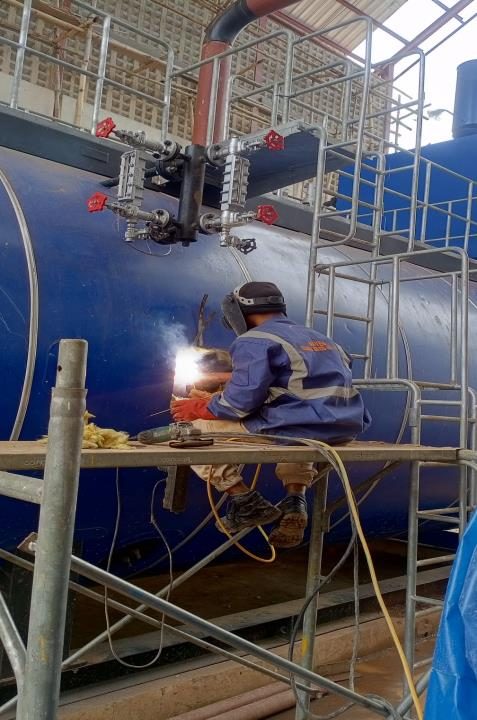
For welded joints, the welder, the procedure and the materials all matter. Qualified welders follow a written procedure, with the right preparation, filler and technique. Then inspection confirms the result.
For flanged joints, use gaskets rated for the steam pressure and temperature. Tighten bolts evenly in a cross pattern, so the gasket seats properly. Uneven tightening is a common cause of leaks.
Testing before steam
Every new steam line should be tested before it carries steam. The usual approach is a hydrostatic test. The line is filled with water, vented of air and raised to a test pressure above the working pressure. Then the crew inspects every joint for leaks.
On higher pressure systems, radiography or other non-destructive testing checks the inside of welds. We used X-ray and NDT on the steam lines for Nigeria Distilleries, for example. Codes such as those from ASME set out when these tests are needed.
After testing, flush the lines. Weld spatter, scale and debris will otherwise travel to traps, valves and process equipment and damage them.
Insulation is part of steam piping installation
A bare steam pipe loses a lot of heat. That heat is fuel the boiler burned for nothing. It also creates more condensate, which means more work for the traps.
So insulation is not a finishing touch. It is part of the job. Use insulation rated for the temperature, fitted tightly with no gaps, and protect it with cladding. Aluminium or galvanised cladding keeps rain and knocks out. Also, insulate valves and flanges with removable jackets, because bare fittings lose surprising amounts of heat.
Good insulation also keeps people safe. Burns from bare steam lines are among the most common injuries in boiler houses.
Safety during steam piping installation and start-up
Most steam piping installation work happens on live sites, often next to lines already carrying steam. So safety planning is part of the job from the first day.
Isolation. Before anyone breaks into an existing line, it must be isolated, depressurised, drained and locked off. A closed valve alone is not enough. Ideally, use double isolation with a vent between, or fit a spade.
Hot work. Welding and cutting need a permit, a fire watch and extinguishers close by. Also, check the area for fuel, oil or flammable dust before striking an arc.
Work at height. Steam mains often run high on pipe racks. Therefore, use proper scaffolds or mobile platforms, with harnesses where the rules require them.
First steam. The riskiest moment is often the first time steam enters a new line. Cold pipe condenses steam fast, and water can collect before traps clear it. So open valves slowly, keep drains open during warm-up, and let the line heat gradually. Rushing this step is how water hammer breaks brand new fittings.
Communication. Finally, make sure everyone knows which lines are live. Tag and label new pipework, and brief crews each shift.
These habits protect people, and they protect the schedule as well. After all, an incident on site costs far more time than doing the job safely.
Pressure reducing stations
Many plants need steam at more than one pressure. A pressure reducing station takes high pressure steam and delivers it at a lower, steady pressure for a particular process.
A good station includes a strainer, a separator or drain ahead of the valve, the reducing valve itself, isolation valves, a bypass for maintenance, gauges on both sides and a safety valve on the low pressure side. Each part has a reason. For example, the strainer protects the valve from debris, while the safety valve protects the low pressure equipment if the reducing valve fails open.
Condensate return
Condensate is hot, clean, treated water. Returning it to the boiler house saves fuel, water and treatment chemicals. Therefore, a complete steam piping installation should include a plan for condensate return wherever it makes sense.
Return lines need their own care. They carry a mix of water and flash steam, so they must be sized for both. They also need proper slopes and supports, just like steam lines.
Mistakes we find in older steam systems
When we survey existing plants, we often find the same problems:
- steam mains sloping the wrong way, so condensate collects
- traps missing, failed or bypassed
- branch lines taken off the bottom of the main
- expansion loops missing, so pipes bow or pull on equipment
- insulation missing, wet or crushed
- leaking flanges and valve glands
- no condensate return at all
Most of these are simple to fix. Together, they can waste a large share of a boiler’s output.
Planning a steam piping installation
If you are planning new steam lines or upgrading old ones, start with these steps:
- Map demand. List every steam user with its pressure and flow.
- Design the layout. Plan routes, slopes, drainage points, supports and expansion.
- Choose materials. Specify pipe, fittings, valves and gaskets for the pressure and temperature.
- Fabricate carefully. Build spools in a workshop where possible, for better quality.
- Test. Hydrotest and, where required, carry out non-destructive testing.
- Insulate. Fit insulation and cladding before commissioning.
- Commission slowly. Warm the lines gently and drain them well, to avoid water hammer on first start.
Useful public resources from Spirax Sarco go into more depth on steam distribution and trapping.
How Maven approaches steam piping
We fabricate spools in our Lagos workshop, then install them with qualified welders and experienced supervisors. We test, insulate and commission every line before handover. Our projects include steam headers, steam mains, pressure reducing stations and condensate return for clients such as Nigeria Distilleries, Prime Gate Distilleries and a textile plant in Cotonou.
If you need a new steam piping installation, a survey of an existing system or a repair, send us your scope. We will reply with a clear method, schedule and price. You can also browse our projects page or read more about our company.