In this article
- What the tank will hold decides everything
- Common tank types
- Choosing materials for storage tank fabrication
- Foundations: the part of storage tank fabrication people forget
- How we approach storage tank fabrication
- Testing a new tank
- Coatings and corrosion protection
- Safety features that belong on every tank
- Storage tank fabrication for fuel: extra rules
- Sectional panel tanks for water
- Maintaining tanks for the long term
- Choosing a partner for storage tank fabrication
- Talk to us
Almost every factory stores something in bulk. Water for boilers and fire fighting, diesel for generators and burners, process liquids, chemicals and finished products all need a safe home. Storage tank fabrication is how that home gets built. Done well, a tank lasts for decades. Done badly, it leaks, corrodes and puts people and the environment at risk.
We fabricate and install storage tanks on site across Nigeria, from large welded steel tanks to sectional panel water tanks. This guide explains the main options, how we build them and what plant owners should check.
What the tank will hold decides everything
The first question is always the contents. Water, diesel, furnace oil, chemicals and food products each place different demands on the tank.
Water. Treated water for boilers, raw water, fire water and potable water all need different levels of cleanliness and protection. Potable water tanks, for example, need linings safe for drinking water.
Fuels. Diesel and furnace oil tanks need secondary containment, vents, level gauges and fire safety measures. Furnace oil tanks may also need heating coils.
Chemicals. Acids, alkalis and treatment chemicals may need stainless steel, special linings or plastic tanks, depending on what they attack.
Food products. Syrups, oils and other food liquids usually need stainless steel with sanitary finishes.
So before any storage tank fabrication begins, list the contents, their temperature and any special hazards.
Common tank types
Several types cover most industrial needs.
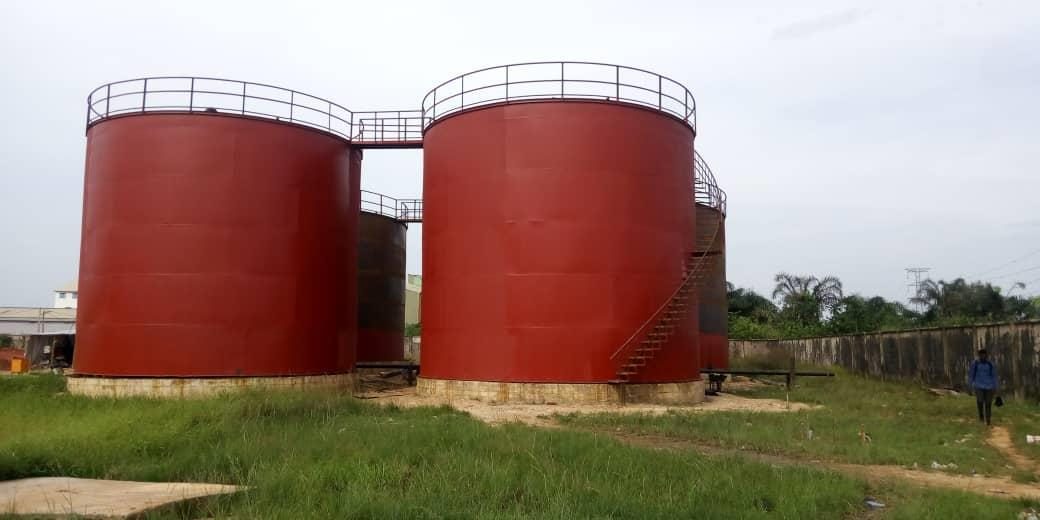
Welded vertical tanks. First, these large cylindrical tanks stand on a prepared foundation. Fabricators build them from steel plates, welded together in courses. They suit large volumes of water, fuel and process liquids.
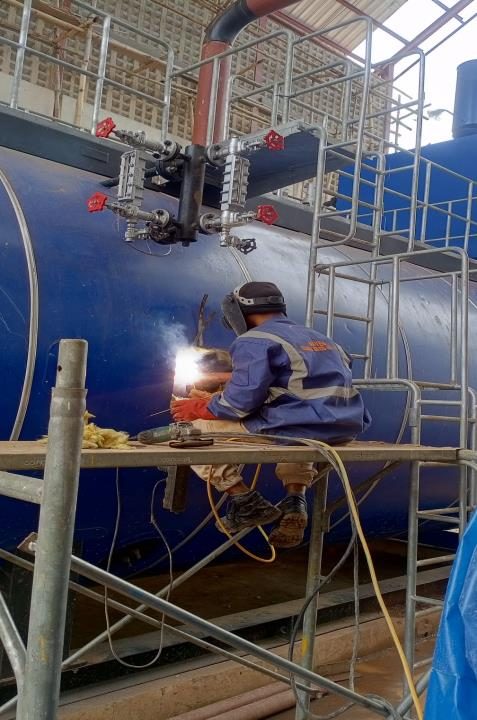
Horizontal tanks. Next, horizontal cylindrical tanks sit on saddles. They suit smaller volumes, such as diesel day tanks, and are often built in a workshop and delivered complete.
Sectional panel tanks. In addition, bolted panel tanks go together from standard pressed panels. They are quick to erect and suit water storage in many sizes.
Pressure vessels. Finally, some tanks hold contents under pressure, such as deaerators and air receivers. These follow pressure vessel design rules.
Choosing materials for storage tank fabrication
Material choice balances cost, durability and compatibility with the contents.
Carbon steel. First, carbon steel is the workhorse for water, fuels and many process liquids. It is strong, weldable and affordable, but it needs good coatings inside and out.
Stainless steel. Next, stainless steel suits corrosive contents, food products and high purity water. It costs more but often needs no internal coating.
Galvanised or coated panels. Sectional tanks commonly use galvanised steel, glass-fused steel or other coated panels for water.
Plastics and GRP. Finally, for some chemicals and small volumes, plastic or glass reinforced plastic tanks make sense.
In storage tank fabrication, a good fabricator explains the trade-offs honestly, rather than pushing the most expensive option.
Foundations: the part of storage tank fabrication people forget
A full tank is very heavy. A large water tank can weigh far more than the steel it is made from. So the foundation must carry that load evenly and without settling.
Uneven settlement causes serious problems. The tank shell can distort, welds can crack and the floor can tear. Therefore, the foundation design should follow a proper ground investigation, with the right base preparation, levelling and drainage.
For vertical tanks, the base often includes a compacted ring wall or concrete slab. For horizontal tanks, concrete saddles or plinths do the job. In every case, the foundation should be level and ready before the tank arrives.
How we approach storage tank fabrication
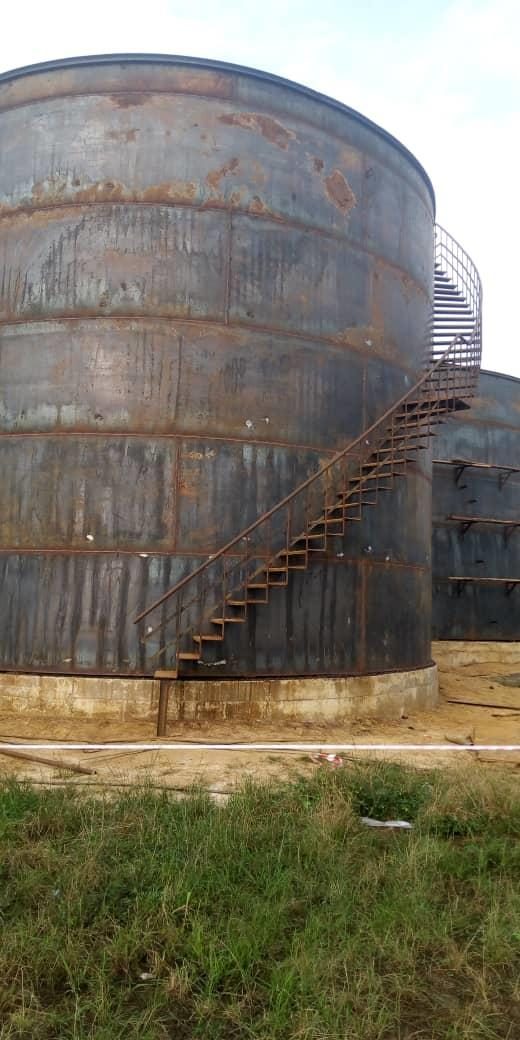
For large welded tanks, most of the work happens on site. Our usual sequence is:
- Check the foundation. First, we confirm level, size and anchor positions.
- Lay the floor. Next, we lay floor plates on the foundation and weld them together.
- Build the shell. Then we erect the shell course by course, welding vertical and horizontal seams as we rise.
- Fit the roof. After that, we install the fixed roof, or a floating roof on some fuel tanks.
- Add nozzles and accessories. We cut and weld nozzles, manways, vents, ladders, platforms and level gauges.
- Inspect welds. Our team inspects welds visually and, where the design requires, with further testing.
- Test. Finally, we fill the tank with water and hold it to prove it is tight and the foundation is stable.
For smaller tanks, we build them in our Lagos workshop and deliver them complete. That gives better control over quality and shortens site time.
Testing a new tank
The standard test for a storage tank is a hydrostatic test. We fill the tank with water to its working level or above, then hold it for a set period. During that time, the team inspects every seam, nozzle and floor edge for leaks. They also monitor the foundation for settlement.
This test proves both the tank and the foundation before any valuable or hazardous contents go in. It is also far easier to fix a leak full of water than one full of diesel.
Industry standards, such as those published by the American Petroleum Institute for welded steel tanks, set out detailed rules for design, welding and testing.
Coatings and corrosion protection
In Nigeria’s warm, humid climate, corrosion is the biggest threat to steel tanks. Protection works on both surfaces.
Outside. Surface preparation removes rust and mill scale. Then primer and finish coats protect the steel from rain and sun. Light colours also reflect heat, which helps with fuel tanks.
Inside. Internal linings protect against the contents. Water tanks may need epoxy linings, and potable water tanks need linings approved for drinking water. Fuel tanks often need linings resistant to hydrocarbons and to water that settles at the bottom.
The floor. The underside of the floor is often the first place a tank fails. Drainage, a sound foundation surface and, in some cases, cathodic protection help prevent it.
Safety features that belong on every tank
A tank is more than a container. It needs features that keep people and the plant safe:
- Vents, so the tank does not collapse or burst as it fills and empties
- Level gauges, so operators know how full it is
- Overflow lines, routed to a safe place
- Manways, for inspection and cleaning
- Ladders and platforms with handrails, for safe access
- Earthing, especially for fuel tanks
- Secondary containment, such as a bund wall, for fuels and chemicals
Leaving these out may lower the price slightly. However, it makes the tank harder to use safely for its whole life.
Storage tank fabrication for fuel: extra rules
Fuel tanks deserve special attention, because a leak or fire can be catastrophic. So storage tank fabrication for diesel and furnace oil follows a few extra rules.
Bunding. First, surround fuel tanks with a bund wall or place them in a containment basin. The bund should hold more than the tank’s full contents, so a failure never reaches drains or soil.
Separation. Next, keep fuel tanks a safe distance from buildings, boilers, generators and other ignition sources, as local fire rules require.
Venting. Fuel tanks breathe as they fill, empty and warm up in the sun. Therefore, they need properly sized vents, with flame arrestors where the rules call for them.
Earthing. Static electricity builds up when fuel flows. As a result, every fuel tank, pipe and filling point needs a sound earth connection.
Water drains. In addition, water collects at the bottom of diesel tanks from condensation and contaminated deliveries. A drain valve at the lowest point lets operators remove it regularly.
Heating for heavy oil. Finally, furnace oil tanks often need heating coils and insulation, so the oil stays warm enough to pump.
Fire safety guidance from bodies such as the National Fire Protection Association is a useful reference when planning fuel storage.
Sectional panel tanks for water
For water storage, sectional panel tanks offer real advantages. Crews can erect them quickly, even in tight spaces. Panels can go through doorways and up stairs, then assemble in place. Also, the owner can replace a damaged panel on its own.
They suit fire water, raw water and treated water for many plants. The key is a level base, careful sealing of every joint and good internal bracing. We install these alongside welded tanks, depending on what suits each site.
Maintaining tanks for the long term
Regular care keeps a tank working for decades:
- Inspect coatings yearly, and repair damaged areas quickly.
- Check vents, level gauges and valves for correct operation.
- Drain water from the bottom of fuel tanks regularly.
- Clean water tanks periodically to remove sediment.
- Inspect the floor and lower shell during planned outages.
- Watch the foundation for cracks or settlement.
Small repairs made early prevent costly failures later.
Choosing a partner for storage tank fabrication
When you compare contractors, ask:
- What similar tanks have you built, and for whom?
- Which design standard will you follow?
- Who will inspect the welds, and how?
- How will you test the tank and the foundation?
- Which coating system will you use, inside and out?
- Can you build smaller tanks in your own workshop?
Clear, confident answers show a contractor who has done this before.
Talk to us
Maven Technical Services has delivered storage tank fabrication, piping and structural steel work across Nigeria since 2009. Recent tank work includes feed water tanks, diesel day tanks and blowdown tanks on boiler projects such as ATMS in Cotonou. You can see more on our tanks project page.
If you need a new tank, a repair or an inspection, send us your scope. We will reply with a clear method, schedule and price. You can also read more about our company.