In this article
- What do industrial valves do?
- The main types of industrial valves
- How do you select industrial valves?
- Which materials suit industrial valves?
- What do pressure ratings on industrial valves mean?
- Which standards cover industrial valves?
- How do you avoid poor-quality valves?
- How should valves be installed?
- How do you maintain industrial valves?
- Frequently asked questions about industrial valves
- Match the valve to the duty
Industrial valves control the flow of liquids and gases in a plant. They start and stop flow, regulate it, prevent it from reversing and release it when pressure climbs too high. In short, the main types are gate, globe, ball, butterfly, check and safety valves. Each one suits a different job, so the right choice depends on the fluid, the pressure, the temperature and the duty.
For example, a wrong valve leaks, sticks or wears out in months. In contrast, the right one works for years with little attention. This guide explains the common types of industrial valves and shows how to select them.
What do industrial valves do?
Every valve performs one or more of four tasks.
- Isolation. It shuts a line completely, so that people can work safely downstream.
- Regulation. The valve controls how much fluid passes.
- Non-return. It lets flow pass in one direction only.
- Protection. A safety device opens on its own to relieve excess pressure.
First, decide which task you need. Many valve failures begin when somebody uses an isolation valve to regulate flow, or the other way round.
The main types of industrial valves
The table gives an overview. After that, each type has its own section.
| Type | Main task | Strengths | Limits |
|---|---|---|---|
| Gate valve | Isolation | Full bore, very low pressure drop | Slow to operate, poor for throttling |
| Globe valve | Regulation | Good control, tight shut-off | Higher pressure drop |
| Ball valve | Isolation | Quarter turn, tight, compact | Soft seats limit temperature |
| Butterfly valve | Isolation and some control | Light, cheap in large sizes | Disc sits in the flow |
| Check valve | Non-return | Automatic, no operator | Can slam if poorly chosen |
| Safety valve | Protection | Opens automatically at set pressure | Needs regular testing |
| Control valve | Automatic regulation | Precise, responds to a signal | Needs air or power and tuning |
Gate valves
A gate valve lifts a flat wedge out of the flow path. When it is fully open, the bore is clear, so the pressure drop is very small. Therefore, gate valves suit main isolation on water, steam and oil lines.
However, never use one to throttle. A partly open gate vibrates, and the flow erodes the seat. As a result, the valve will no longer seal.
Globe valves
In a globe valve, a disc moves down onto a seat, and the fluid changes direction as it passes. As a result, this design gives fine control and tight shut-off. So globe valves suit steam control, feed water regulation and bypass lines. On the other hand, the twisting path causes more pressure drop than a gate valve.
Ball valves
A ball valve uses a drilled ball that turns through 90 degrees. In addition, it opens and closes quickly and seals very tightly. Because of that, it is the usual choice for gas, compressed air, fuel and many process lines.
However, most ball valves have soft seats, often PTFE. Those seats limit the temperature. For hot steam service, choose metal seated or specially rated valves.
Butterfly valves
A butterfly valve turns a disc in the centre of the pipe. It is slim, light and economical, especially in large diameters. For that reason, plants use it widely on cooling water, chilled water, fire water and low pressure services.
Two body styles are common. For example, a wafer valve sits between two flanges. A lugged valve has threaded lugs, so one side of the pipe can come off while the valve holds the other.
Check valves
A check valve stops backflow. In addition, it protects pumps, prevents tanks from draining and keeps fluids from mixing. Swing, lift, dual plate and spring loaded disc designs all exist.
Selection matters here. For example, a swing check on a pump with a fast stop can slam shut and cause water hammer. By contrast, a spring assisted, non-slam type closes sooner and more gently.
Safety and relief valves
A safety valve protects a boiler, vessel or line from overpressure. A spring holds it shut until the pressure reaches the set point. Then it opens and discharges until the pressure falls.
Because lives depend on it, treat it with respect. First, engineers must size it for the duty, and a competent person must set, seal and test it. Never fit an isolation valve that could cut it off from the equipment it protects.
Control valves
A control valve is usually a globe or rotary valve with an actuator. A controller sends a signal, and the actuator moves the valve to hold a pressure, temperature, level or flow. For example, pressure reducing stations, feed water control and temperature loops all rely on them.
How do you select industrial valves?
Good selection of industrial valves follows a set of questions. Answer them in order.
- What is the fluid? Steam, water, oil, gas, chemical or slurry? Is it clean or dirty, corrosive or harmless?
- What are the pressure and temperature? Use the maximum figures, not the normal ones.
- What is the task? Isolation, regulation, non-return or protection?
- What size is the line? In most cases, the valve matches the pipe size. Control valves, however, are often smaller than the line.
- How will it connect? Flanged, screwed, welded or wafer?
- How will it operate? Handwheel, lever, gearbox, pneumatic or electric actuator?
- How often will it operate? After all, a valve that cycles all day needs a different design from one that moves twice a year.
- Which standard applies? The project specification usually names it.
The table below gives a first guide for common services.
| Service | Isolation | Regulation | Non-return |
|---|---|---|---|
| Steam | Gate or globe, bellows sealed for critical duty | Globe or control valve | Disc or lift check |
| Boiler feed water | Gate or globe | Globe or control valve | Spring loaded check |
| Cooling and chilled water | Butterfly or gate | Butterfly or globe | Dual plate check |
| Natural gas | Ball | Regulator | As specified |
| Compressed air | Ball | Globe or regulator | Spring check |
| Fuel oil | Ball or gate | Globe | Swing or lift check |
| Fire water | Gate or butterfly, with position indicator | Not applicable | Swing or wafer check |
Which materials suit industrial valves?
In short, the body holds the pressure, and the trim does the sealing. Both must suit the fluid.
- Cast iron. Low cost, for water at low pressure and temperature.
- Ductile iron. Stronger and tougher than cast iron, common on water and fire lines.
- Cast carbon steel. The standard for steam, oil and gas at higher pressures. Grade WCB is typical.
- Forged steel. Used for small, high pressure valves.
- Stainless steel. For corrosive fluids, food, beverage and pharmaceutical lines. Grades CF8 and CF8M match 304 and 316.
- Bronze and brass. For small water, air and steam valves at modest pressures.
In addition, trim materials include stainless steel, hard-faced alloys and soft seats such as PTFE and rubber. For steam, avoid soft seats unless the maker rates them for the temperature.
What do pressure ratings on industrial valves mean?
In other words, a rating tells you how much pressure a valve can hold at a given temperature. Two systems are common.
The first is the ASME class system, with Class 150, 300, 600 and higher. The second is the European PN system, with PN10, PN16, PN25, PN40 and so on. In the PN system, the number roughly equals the pressure in bar at room temperature.
Remember that the allowable pressure falls as the temperature rises. So always check the pressure and temperature table for the material. Also match the flange standard to the pipe. An ASME Class 150 flange will not bolt to a PN16 flange of the same nominal size, because the drilling differs.
Which standards cover industrial valves?
Standards set dimensions, materials, testing and marking. Common ones include the ASME B16 series for flanges and valve dimensions and the API standards from the American Petroleum Institute, such as API 600 for steel gate valves and API 598 for valve testing. European projects use EN and ISO standards instead.
A reputable manufacturer tests every valve before dispatch and can supply a test certificate. Ask for it, along with material certificates for pressure parts.
How do you avoid poor-quality valves?
However, the market holds many valves of doubtful origin. After all, a cheap valve that fails on a steam line costs far more than it saved. So take these precautions.
- Buy from suppliers who can trace the valve to its manufacturer.
- Check the body markings: maker, size, rating, material grade and heat number.
- Ask for test and material certificates.
- Inspect on arrival for casting flaws, damaged faces and missing parts.
- Compare the weight and wall thickness with a known good valve where you can.
- Be wary of prices far below the market.
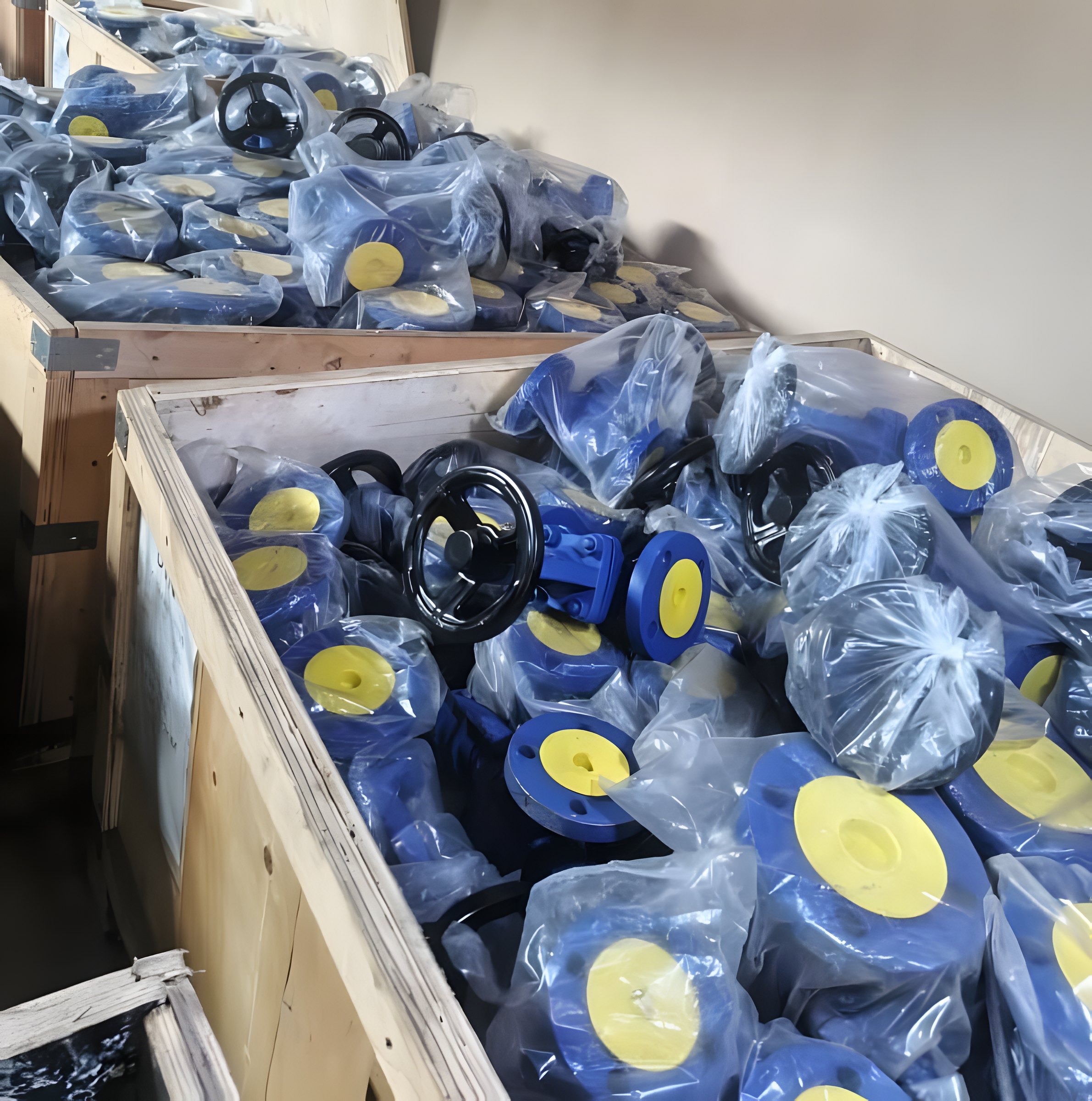
Maven Technical Services supplies certified fittings, flanges and valves through its sourcing network, along with boiler spares and insulation materials.
How should valves be installed?
Even good industrial valves fail when badly fitted. Follow these basics.
- Clean the pipe, and flush the line before start-up. Welding debris destroys seats.
- Check the flow arrow on globe, check and control valves.
- Support the pipe, so that the valve carries no pipe strain.
- Use the correct gaskets and tighten flange bolts evenly, in a cross pattern.
- Leave space for the handwheel, the actuator and future removal.
- Fit strainers ahead of control valves, traps and meters.
- Install valves on steam lines so that condensate cannot collect in them.
In addition, open steam valves slowly. After all, a sudden rush of steam into a cold line causes water hammer and thermal shock.
How do you maintain industrial valves?
In fact, a little care prevents most problems.
- Exercise isolation valves. Operate them fully a few times a year, so that they do not seize.
- Adjust gland packing. For example, a small leak at the stem often stops with a gentle tightening. Replace the packing if it does not.
- Lubricate. Grease stems and gearboxes as the maker advises.
- Test safety valves. Follow the statutory interval, and keep the certificates.
- Clean strainers. After all, dirt is the main cause of seat damage.
- Keep records. Tag each valve and note repairs and replacements.
During a shutdown, remove critical valves for overhaul or replacement. Our guide to plant shutdown planning explains how to schedule that work.
Frequently asked questions about industrial valves
Which valve is best for steam?
Globe valves suit steam control, and gate valves suit isolation on steam mains. In addition, for critical duties, bellows sealed valves prevent stem leaks. Always check that the material and seats suit the steam temperature.
What is the difference between a gate valve and a ball valve?
A gate valve lifts a wedge and needs many turns to operate. A ball valve turns a drilled ball through 90 degrees. Ball valves act faster and seal tighter, while gate valves cope better with high temperature.
What do PN16 and Class 150 mean?
Both are pressure ratings. PN16 is a European rating of about 16 bar at room temperature. Class 150 is an ASME rating of similar strength, but its flange drilling is different.
How often should safety valves be tested?
Test them at the interval your regulations and insurer require, which is commonly once a year. A competent person should carry out the test and issue a certificate.
Match the valve to the duty
The right industrial valves protect your process, your people and your budget. So define the fluid, the conditions and the task first, and buy from a traceable source.
Maven Technical Services supplies valves, flanges and fittings, and installs the piping systems that use them. Send our engineers your valve list or specification, or read our guide to steam piping installation.