In this article
- What is condensate, and why is it valuable?
- How much can condensate recovery save?
- How does a condensate recovery system work?
- What is flash steam?
- How do you size condensate recovery lines?
- Electric pump or pressure powered pump?
- How do you protect condensate quality?
- Which mistakes ruin a condensate recovery system?
- When is condensate recovery not worth it?
- Does the feed tank matter?
- How should you plan a condensate recovery project?
- Frequently asked questions about condensate recovery
- Stop sending money to drain
Condensate recovery means collecting the hot water that forms when steam gives up its heat, and returning it to the boiler feed tank. That water is already hot, already treated and almost pure. So every litre you return saves fuel, raw water and treatment chemicals at the same time.
Many Nigerian plants still send condensate to drain. In most cases, that is the largest avoidable loss in the steam system. This guide explains how condensate recovery works, what it saves and how to design it properly.
What is condensate, and why is it valuable?
When steam heats a process, it condenses back into water. That water leaves the steam trap at close to steam temperature. Even at low pressure, it holds roughly a fifth to a quarter of the energy that the fuel put into the steam.
Condensate is also clean. It is distilled water, so it carries almost no hardness or dissolved solids. In contrast, raw water needs softening and chemical treatment before a boiler can use it.
Therefore, condensate has three kinds of value:
- Heat. Hot feed water needs less fuel to become steam.
- Water. Each litre returned is a litre you do not have to buy or pump.
- Chemicals. Clean water needs less treatment and less blowdown.
How much can condensate recovery save?
The savings depend on how much you return and how hot it stays. As a rule of thumb, every six degrees Celsius of extra feed water temperature saves about one percent of boiler fuel.
Consider a simple example. A plant feeds its boiler with cold make-up water at 30 degrees. After it installs a return system, the feed tank sits at 85 degrees. That rise of 55 degrees cuts fuel use by around nine percent. In addition, the plant buys less water and uses fewer chemicals.
Blowdown falls as well. Because condensate carries so few solids, the boiler water stays cleaner. So the operator can blow down less often, which saves more heat.
Hot feed water also protects the boiler. Warm water holds less dissolved oxygen, and oxygen causes pitting. As a result, good condensate recovery lengthens boiler life.
How does a condensate recovery system work?
A typical system has six parts.
- Steam traps. They release condensate from mains and process equipment. Our guide to steam traps explains the types.
- Collection lines. Pipes carry the condensate from each trap to a collecting point.
- The receiver. This vented tank collects the condensate and lets flash steam separate.
- A pump. An electric or pressure powered pump lifts the condensate back to the boiler house.
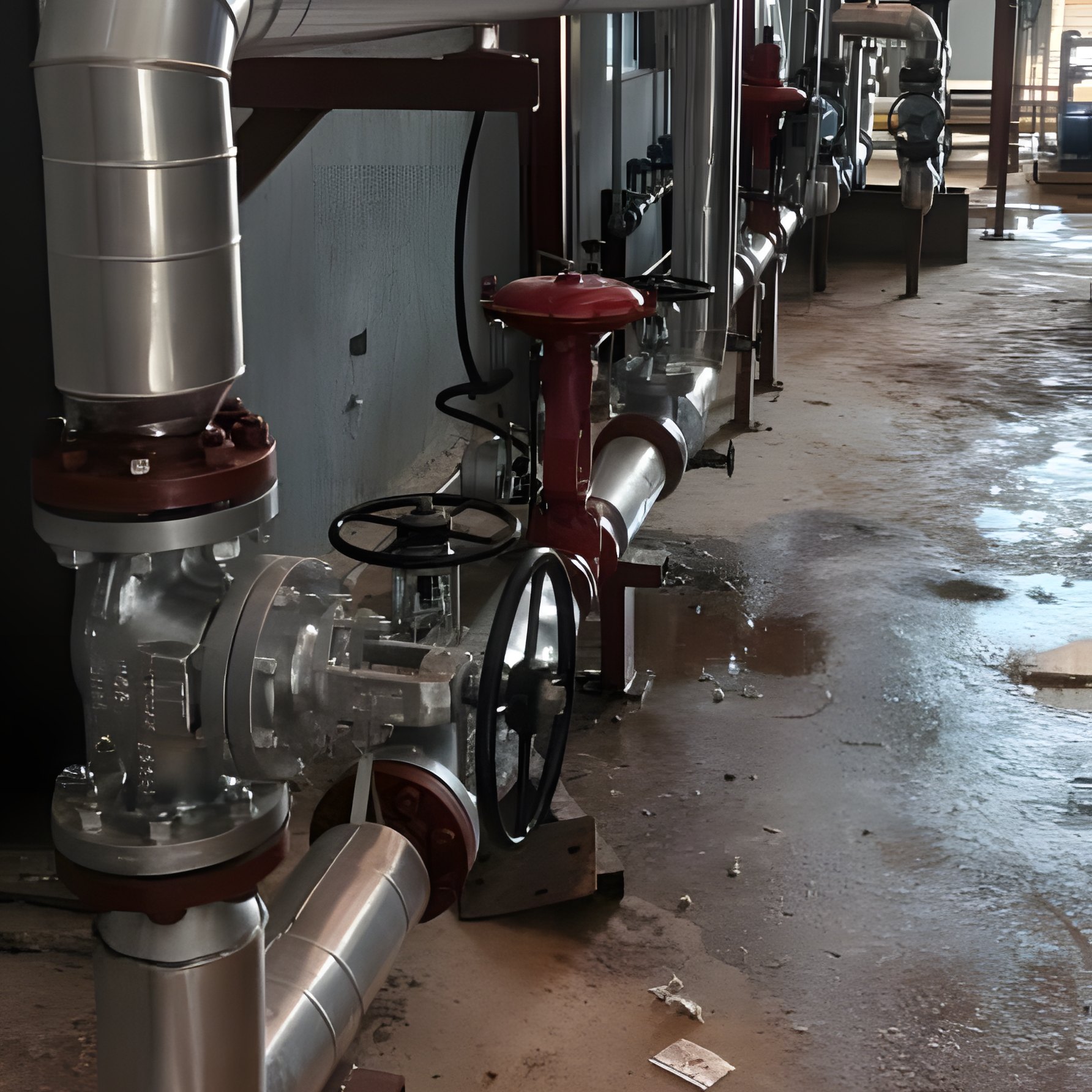
- Return mains. Insulated pipes carry it across the site.
- The feed tank or deaerator. Here the condensate mixes with treated make-up water before the feed pumps send it to the boiler.
What is flash steam?
Condensate leaves a trap hot and under pressure. When it enters a lower pressure line, some of it boils instantly. That vapour is flash steam.
Flash steam is real steam, and it has real value. For example, condensate from a 10 bar system can release well over ten percent of its mass as flash steam at atmospheric pressure. If the receiver simply vents it, you see a white plume above the roof, and the energy disappears.
A flash vessel captures that steam. Then the plant can use it for low pressure heating, such as preheating water or air. For this reason, large systems recover flash steam before they pump the condensate.
How do you size condensate recovery lines?
This is where many systems go wrong. A return line does not carry water alone. After the trap, it carries a mix of water and flash steam, and the steam takes up most of the space.
Therefore, a line sized only for the water will be far too small. The result is high back pressure, noise and water hammer. Traps then struggle to discharge, and equipment floods.
Follow these principles:
- Size discharge lines from traps for the flash steam, not just for the water.
- Slope gravity lines towards the receiver, so that they drain.
- Enter return mains from the top where possible.
- Keep pumped lines and gravity lines separate.
- Avoid lifting condensate after traps on equipment with temperature control.
Electric pump or pressure powered pump?
Both types work. However, each suits different conditions.
| Feature | Electric centrifugal pump | Pressure powered pump |
|---|---|---|
| Drive | Electric motor | Steam or compressed air |
| Hot condensate | Can cavitate near boiling point | Handles very hot condensate |
| Power supply | Needs cabling and a starter | Needs no electricity |
| Hazardous areas | Needs suitable motors | Well suited |
| Capacity | Wide range, high flows | Lower flows per unit |
| Maintenance | Seals, bearings, motor | Check valves and mechanism |
Cavitation is the main risk with electric pumps. When very hot water enters the pump, it can flash into vapour and damage the impeller. So the receiver must sit high enough above the pump, and the pump must suit hot service.
A pressure powered pump has no such problem. It fills by gravity and then uses steam or air to push the condensate out. Because of that, it suits remote corners of the plant where power is not available.
How do you protect condensate quality?
Returned condensate must be clean. Otherwise, it can harm the boiler.
Contamination. A leaking heat exchanger can let product, oil or process liquid into the condensate. In food, sugar and chemical plants, this is a real risk. Therefore, fit a conductivity or turbidity monitor on suspect returns, with a dump valve that sends bad condensate to drain automatically.
Corrosion. Carbon dioxide dissolves in condensate and forms a weak acid. Over time, that acid thins the return pipes and carries iron back to the boiler. Good deaeration and the right treatment chemicals control it. Our boiler water treatment guide covers this in more detail.
Dirt. Rust and debris collect in old systems. So fit strainers, and clean the receiver during shutdowns.
Which mistakes ruin a condensate recovery system?
We see the same faults again and again when we survey plants.
- return lines that are too small for the flash steam
- bare return pipes that lose heat all the way to the boiler house
- receivers without a proper vent, which then pressurise
- pumps that cavitate because the receiver sits too low
- several traps at different pressures discharging into one small line
- no check valves, so condensate flows backwards
- failed traps that blow steam into the return main
- a feed tank that overflows hot water to drain
Each one reduces the saving. Together, they can make a system so troublesome that operators bypass it. For that reason, design and installation matter as much as the equipment.
When is condensate recovery not worth it?
Not every drop is worth chasing. For example, a small heater at the far end of the site may need a long pipe run for very little water. In that case, the pipe, the insulation and the pump can cost more than the saving.
Some condensate is also too risky to return. If a process could leak acid, oil or sugar into it, treat that stream with care. You can still recover the heat, however, by passing the dirty condensate through a heat exchanger before it goes to drain.
Does the feed tank matter?
Yes, a great deal. The feed tank is where the recovered heat meets the make-up water. So insulate it and cover it. Mix the hot condensate and cold make-up below the water surface, so that flash steam condenses instead of escaping.
A deaerator does the job better on larger plants. It heats the feed water to just above boiling point and strips out oxygen. For a real example of this scope, see our boiler feed water piping work at De-United Foods in Benin City.
How should you plan a condensate recovery project?
Start with a survey. First, list every steam user, its pressure and its load. Then note where the condensate goes today.
Next, rank the sources. Large, clean and nearby sources pay back fastest. Small or distant ones may not justify a pipe run.
After that, design the collection points, flash recovery, pumps and return route. Finally, cost the work and compare it with the yearly saving. In most plants with long running hours, payback comes within one to two years. The Carbon Trust publishes independent guidance on steam and condensate savings.
Frequently asked questions about condensate recovery
What percentage of condensate should a plant return?
Many well designed plants return 70 to 90 percent. The rest is steam that enters the product or cannot be recovered safely.
Is condensate safe to reuse in the boiler?
Yes, as long as it is clean. Monitor returns from any equipment that could leak product into the condensate, and dump contaminated water automatically.
Why is my condensate return line noisy?
Banging usually means water hammer. Common causes are undersized lines, poor slope, lifts after traps and steam leaking through failed traps.
Do return lines need insulation?
Yes. Bare return lines lose much of the heat you are trying to recover. They are also a burn hazard for staff.
Stop sending money to drain
Condensate recovery is one of the surest ways to cut the cost of steam. It saves fuel, water and chemicals, and it protects the boiler.
Maven Technical Services designs, fabricates and installs steam and condensate systems for plants across Nigeria and Benin Republic. Contact our engineers for a survey of your system, or read our guide to steam piping installation.