In this article
- Why Dufil chose biomass
- The scope of this biomass boiler installation
- Emission control, ash and steam
- What makes a biomass boiler installation different
- How we plan a biomass boiler installation on site
- Safety on a live factory site
- What the client gains
- Lessons for plants considering biomass
- Where the project stands
- Talk to us about your steam plant
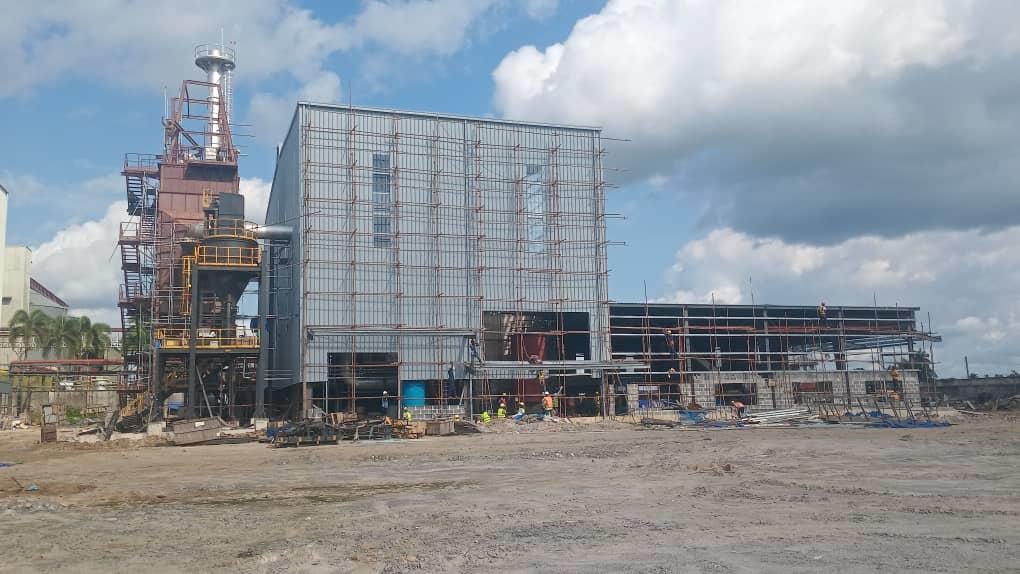
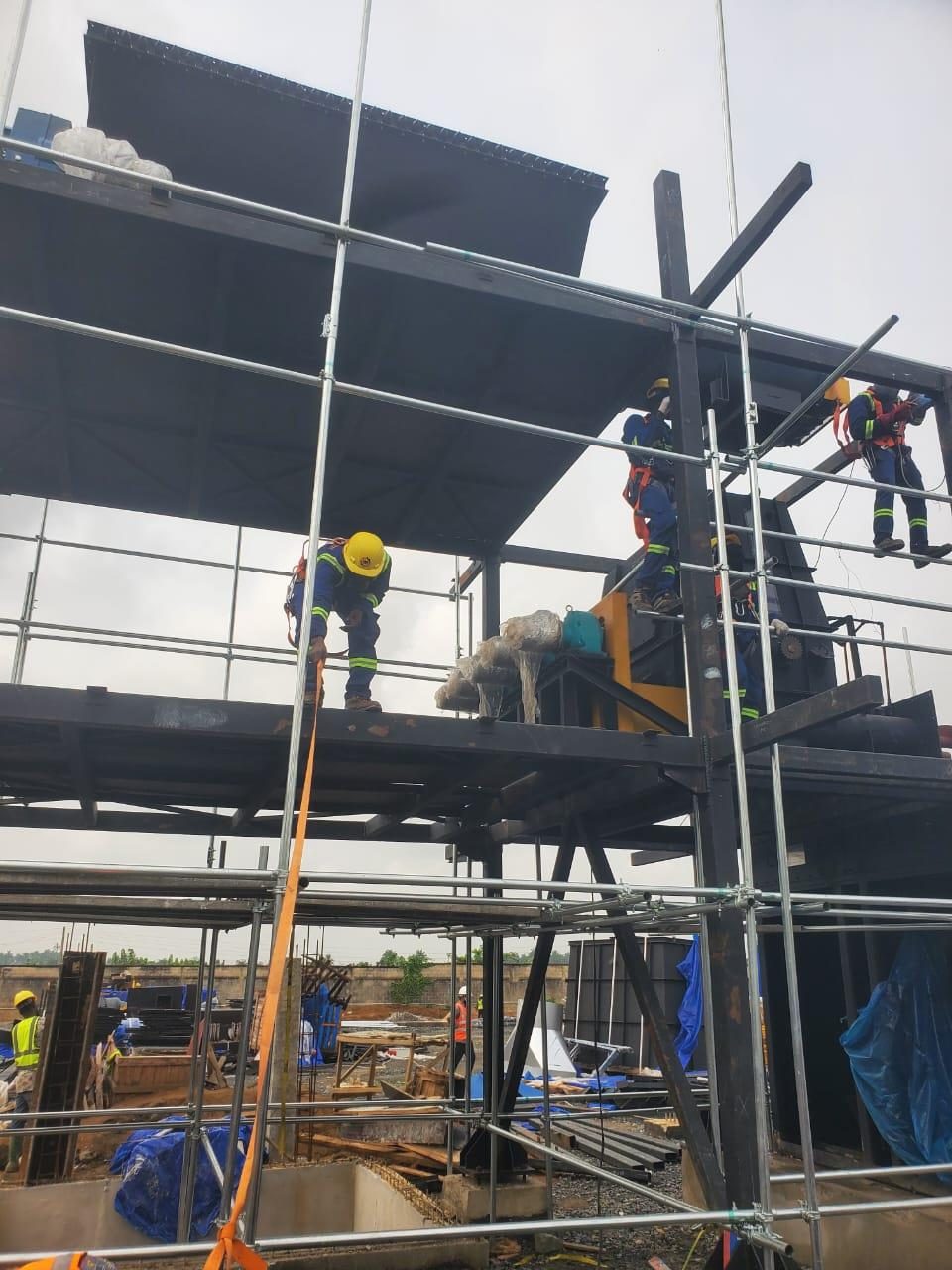
Our biggest job on site right now is a biomass boiler installation for Dufil Prima Foods Limited in Port Harcourt, Rivers State. The unit is a 25 tonnes-per-hour Thermax biomass boiler. Our team is erecting it from the ground up, and it is the largest biomass boiler installation we have taken on, so the scope runs from the furnace structure and pressure parts to the electrostatic precipitator, the chimney, ash handling and steam piping.
This post walks through what that work involves, why biomass makes sense for a food manufacturer, and what we have learned so far. It is also a useful guide if your plant is weighing up a similar move.
Why Dufil chose biomass
Steam is the working heart of a food factory. It cooks, it dries and it cleans. For a plant of Dufil’s size, the fuel bill behind that steam is one of the largest running costs on site.
Biomass boilers burn organic fuel such as palm kernel shells, wood chips and agricultural husks. In Nigeria, that fuel is often local and available all year. As a result, a plant can reduce its exposure to diesel and gas price swings. It can also put waste from the agricultural value chain to good use.
However, biomass is harder to burn well than gas. The fuel varies in size and moisture. It leaves ash that has to go somewhere. It also produces particulates that must be caught before the flue gas reaches the sky. That is why a biomass boiler installation carries far more auxiliary equipment than a packaged gas unit, and why the erection work is so involved.
The scope of this biomass boiler installation
Thermax designed and supplied the boiler. Our job is to erect and install it to Thermax drawings, then support commissioning and handover. Maven is the appointed partner of Thermax for installing and maintaining boilers and chillers, so we know these units well.
The full scope covers more than thirty separate work packages. For clarity, we group them into five areas.
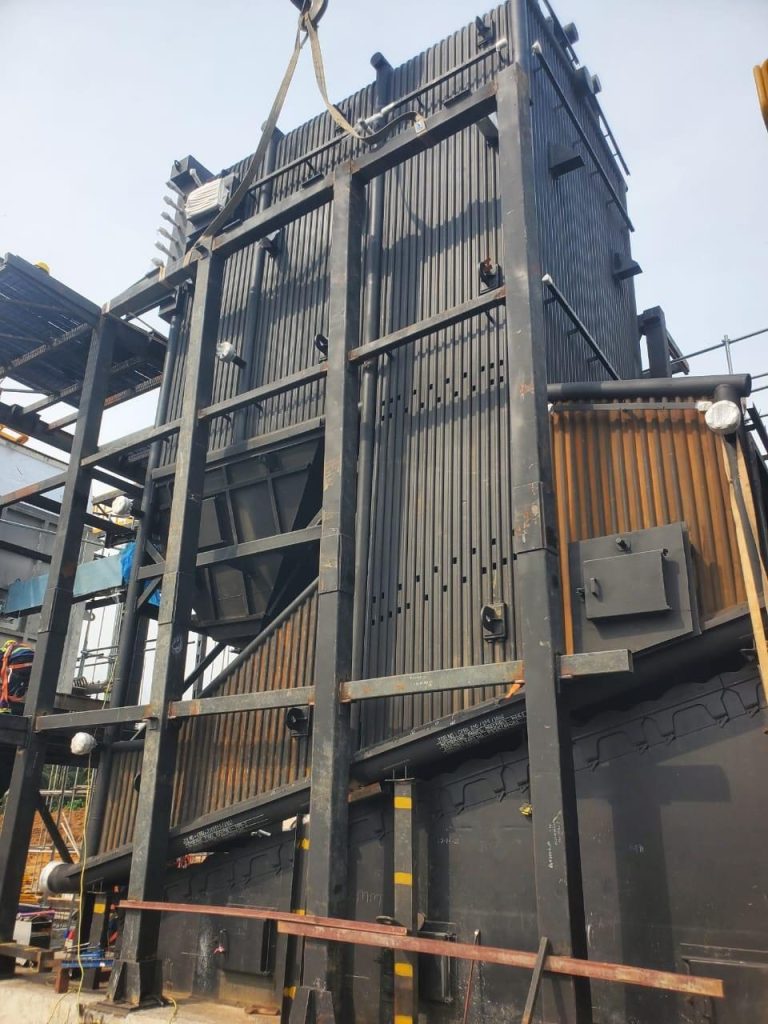
Furnace and pressure parts. First comes the heavy structure. We erect the sloped grate and the furnace structure, then the furnace MPA structure above it. Next, the pressure parts go in: the water wall assembly and the main shell assembly. Much of this work is site welding, so welder qualification and weld inspection matter at every joint.
The economiser follows, with its own support structure, main assembly, and inlet and outlet ducts. The economiser recovers heat from the flue gas and uses it to preheat feed water. In short, it is one of the simplest ways a boiler saves fuel.
Air, fuel and flue gas. A biomass boiler needs a lot of air, delivered in the right place. We erect the forced draught (FD) fan and the primary air (PA) fan, then fabricate and install the air ducting to the boiler grate chamber. Meanwhile, we assemble the fuel handling system so shells and chips can move steadily from storage to the furnace.
On the exhaust side, we fabricate and erect flue gas ducting from the economiser to the electrostatic precipitator (ESP). After that, the induced draught (ID) fan pulls gas through the system and sends it up the stack.
Emission control, ash and steam
The electrostatic precipitator. The ESP is what keeps a biomass plant a good neighbour. It charges dust particles in the flue gas and collects them on plates, so the gas leaves far cleaner. Our work here includes the support structure, the main casing assembly, the hopper and the internals.
ESP internals need patience. Electrodes and collecting plates must sit at precise spacing, because poor alignment reduces collection efficiency. So we check alignment carefully before the casing closes.
Chimney and ash handling. We are erecting a 33 metre chimney with its accessories, plus the flue gas ducting and supports from the ESP to the chimney. A stack of this height needs a sound foundation, good plumb, and safe lifting plans for each section.
Ash is the other half of the story. Therefore, the scope includes the ash handling system, a dense phase ash conveying system, and an ash silo that we fabricate and erect ourselves. Dense phase conveying moves ash through pipes at low velocity. That means less wear on the pipework and less dust around the boiler house.
Water, steam and the balance of plant. Finally, there is the balance of plant. This covers the steam header, the deaerator and its accessories, feed water pumps, and a water softener plant. It also includes IBR piping, non-IBR piping, steam piping and compressed air piping. We fabricate blowdown and drain piping with a blowdown vessel, install boiler mountings and fittings, and run cable tray supports and trays for power, control and signal cables.
Refractory works and insulation manpower round out the package. Refractory protects the furnace structure from heat, while insulation keeps steam hot and keeps people safe.
What makes a biomass boiler installation different
We install gas, diesel and biomass boilers. The biomass jobs are always the most demanding, for three reasons.
The equipment list is longer. A gas boiler needs a burner and a gas train. A biomass unit, on the other hand, needs fuel handling, a grate, fans, an ESP, ash conveying and an ash silo. Each item has its own foundation, structure, piping and cabling. In practice, the balance of plant can take as much effort as the boiler itself.
The steelwork is heavier. Grate structures, ESP casings and tall chimneys mean big lifts. So crane planning, rigging and lifting supervision become central to the schedule, not an afterthought.
Welding quality decides the outcome. Pressure parts and IBR piping must meet strict standards. For that reason, we use qualified welders, controlled procedures and inspection at every stage. The ASME boiler and pressure vessel codes set much of the benchmark here.
How we plan a biomass boiler installation on site
A project with this many packages only runs smoothly with a clear sequence. Here is the order we follow on most large biomass jobs.
- Foundations and survey. Before any steel goes up, we check foundation levels, anchor bolt positions and orientation against the drawings.
- Main structure. Next, the boiler structure, grate and furnace go up, because everything else hangs off them.
- Pressure parts. Then the water walls, shell and economiser go in, followed by site welding and inspection.
- Draught system. After that, fans and ducting connect the air and gas paths.
- Emission control. The ESP, ID fan and chimney complete the flue gas route.
- Auxiliaries. Fuel handling, ash handling, water treatment and piping follow in parallel where the space allows.
- Finishing. Finally, refractory, insulation, cabling and mountings prepare the unit for commissioning.
Work packages overlap, of course. While the ESP casing rises, for example, a separate crew can fabricate pipe spools in the workshop. That parallel working is how we keep a large biomass boiler installation moving without crowding the site.
Safety on a live factory site
Dufil’s plant keeps running throughout the biomass boiler installation. That changes how we work. Every lift needs a plan and an exclusion zone. Hot work needs a permit and a fire watch. Moreover, our supervisors brief the crews each morning so everyone knows which areas are live and which are closed.
We treat safety as part of quality, not a separate box to tick. A rushed lift or a skipped permit rarely saves time in the end. Instead, it tends to cost days.
What the client gains
When the unit is complete, Dufil will have a large, modern steam source running on biomass. The main benefits of a well-executed biomass boiler installation are simple:
- Lower fuel exposure. Local biomass reduces dependence on diesel and gas.
- Cleaner stack. The ESP captures particulates before they leave the plant.
- Better efficiency. The economiser and deaerator recover heat and protect the boiler.
- Tidy ash handling. Dense phase conveying and a dedicated ash silo keep the boiler house clean.
- Long service life. Good welding, sound refractory and proper insulation protect the investment for years.
Lessons for plants considering biomass
If you run a factory in Nigeria and are thinking about biomass, a few points are worth weighing early.
First, secure your fuel supply before you buy the boiler. A biomass unit is only as reliable as the shells or chips feeding it. Next, plan space for fuel storage and ash disposal, because both take more room than most people expect. Also, budget for emission control from day one. An ESP or a bag filter is not an optional extra on a unit of this size.
Finally, choose an installer who has done this before. A biomass boiler installation involves structural, mechanical, piping, electrical and refractory work, all on one site. Coordination between those trades is where projects succeed or slip.
Where the project stands
The Dufil job is ongoing. You can see the full scope of work and more site photographs on the Dufil project page. We will post updates on this biomass boiler installation as the unit moves towards commissioning.
In the meantime, our other boiler work is on the projects page. Recent jobs include a 20 TPH boiler and turbine for Nigeria Distilleries in Sango Ota and three Forbes Marshall boilers for a textile plant in Cotonou.
Talk to us about your steam plant
Maven Technical Services has delivered engineering, fabrication and installation work across Nigeria and West Africa since 2009. We handle boilers, chillers, piping, structural steel, tanks, silos and more, with our own fabrication facility in Lagos.
If you are planning a new boiler, a biomass conversion or an upgrade to your existing steam system, send us your scope. We will come back with a clear method, schedule and price. You can also read more about our company and the team behind our projects.