In this article
- Start with your steam demand
- Choosing fuel for an industrial boiler installation in Nigeria
- Plan the site before the boiler arrives
- The balance of plant decides performance
- Water treatment is not optional
- Welding and testing standards
- Power supply and an industrial boiler installation in Nigeria
- Electrical work and controls
- Commissioning an industrial boiler installation in Nigeria
- Mistakes we see in industrial boiler installation across Nigeria
- Choosing an installer for industrial boiler installation in Nigeria
- What happens after handover
- How Maven can help
Buying a boiler is a big decision. Installing it well is just as important. An industrial boiler installation in Nigeria brings its own challenges, from fuel supply and water quality to logistics and power. Get them right, and the boiler will serve the plant for decades. Get them wrong, and it will cost money every day it runs.
We have installed boilers for food, beverage, textile, distilling and agro-processing plants across Nigeria and in Benin Republic. This guide shares what we have learned, in plain terms, for plant owners and managers planning their next steam project.
Start with your steam demand
Every good boiler project starts with numbers. How much steam does the plant use? At what pressure? When are the peaks, and how long do they last?
Many plants guess. As a result, they buy boilers that are too big or too small. An oversized boiler cycles on and off, wastes fuel and wears out faster. On the other hand, an undersized boiler cannot hold pressure at peak load, and production suffers.
So measure first. If you already have a boiler, log steam flow, pressure and fuel use over a normal week. If this is a new plant, work from the process equipment data. Then add a sensible margin for growth, not a huge one.
Choosing fuel for an industrial boiler installation in Nigeria
Fuel choice shapes the whole project. The main options are natural gas, diesel (HSD), furnace oil (LPFO) and biomass.
Natural gas. First, gas burns cleanly and needs little fuel handling. Where a reliable pipeline supply exists, it is often the easiest choice.
Diesel. Next, diesel is widely available and simple to store, yet usually expensive per unit of heat. Many plants keep it as a backup fuel.
Furnace oil. Furnace oil is cheaper than diesel in many markets. However, it needs heating, circulation and careful burner tuning.
Biomass. Finally, biomass such as palm kernel shells or wood chips can be cheap and local. Yet it needs fuel handling, ash handling and emission control, which add cost and space.
Many Nigerian plants choose dual fuel boilers. That way, if gas supply fails or diesel prices jump, the plant can switch and keep running.
Plan the site before the boiler arrives
A boiler house needs more space than most people expect. Beyond the boiler itself, you need room for:
- water treatment and softeners
- the deaerator and feed tank
- feed pumps
- fuel storage and pumping
- the chimney
- blowdown vessels and drains
- control panels
- safe access for operators and maintenance
Also think about lifting. The boiler must get onto its foundation, which often means a large crane. Check access roads, ground bearing capacity and overhead lines early. Then plan the foundation to the boiler supplier’s drawings, with anchor bolts in exactly the right places.
The balance of plant decides performance
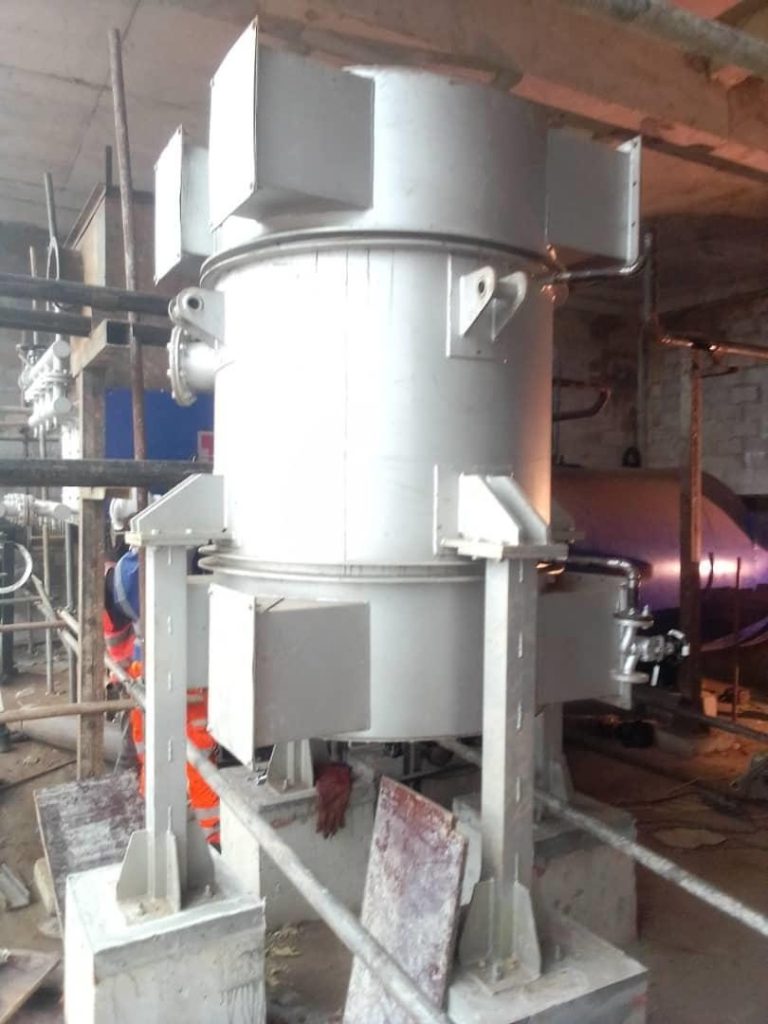
The boiler is only part of the system. The rest, called the balance of plant, often takes more site time than the boiler itself. In most projects, it includes the chimney and ducting, feed water system, steam header and distribution, condensate return, fuel system, insulation, blowdown, controls and electrical work.
Every one of these affects efficiency and safety. For example, a poor chimney chokes the burner. Missing condensate return wastes water and fuel. And bare steam pipes waste energy every hour. So treat the balance of plant as part of the engineering, not an extra.
Water treatment is not optional
Nigerian water sources vary widely. Borehole water is often hard, and some sources carry iron or silica. Untreated, this water forms scale inside the boiler and corrodes steel.
Scale acts as insulation on the tubes. As a result, the boiler burns more fuel for the same steam, and tubes can overheat and fail. Corrosion, meanwhile, eats away at metal from the inside.
A sound water treatment plan usually includes softening, deaeration, chemical dosing and regular testing. It costs a fraction of a tube failure. So budget for it from day one.
Welding and testing standards
Steam at pressure stores a lot of energy. A failed weld can injure people and destroy equipment. Therefore, every industrial boiler installation in Nigeria should follow recognised standards for pressure piping and vessels.
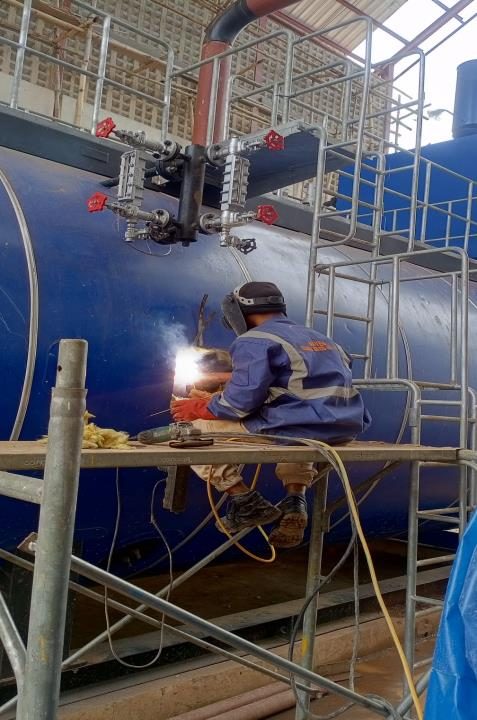
In practice, that means qualified welders, approved procedures and proper inspection. On high pressure lines, radiography (X-ray) or other non-destructive testing checks the inside of the weld. Hydrostatic testing then proves the whole system at a pressure above normal working pressure.
International codes, such as those published by ASME, are widely used as the benchmark. Ask your installer which standards they follow and what test records you will receive.
Power supply and an industrial boiler installation in Nigeria
Boilers need electricity as well as fuel. Feed pumps, burner fans, controls and water treatment all run on power. So an unreliable grid is a real risk for any industrial boiler installation in Nigeria.
If power drops while the boiler is firing, the burner stops and the feed pumps stop with it. The boiler then loses pressure, and production halts. Worse, a sudden trip can stress the pressure parts if it happens often.
Therefore, plan the boiler house supply carefully. Most plants connect the boiler to a generator-backed supply, with automatic changeover. Some add an uninterruptible power supply for the controls, so the burner management system shuts down in a safe, orderly way if power fails.
Also size cables and protection for motor starting currents. Feed pumps and fans draw a surge when they start. If the supply cannot handle it, contactors chatter and motors trip. A good electrical design avoids these nuisance problems from day one.
Electrical work and controls
Modern boilers rely on controls. Burner management, water level control, pressure limits and alarms all depend on sound wiring and correctly set instruments.
So electrical work needs the same care as piping. Cables should run in trays or conduit, away from heat. Earthing must be sound. And every safety interlock must be proven during commissioning. A boiler with a faulty low water cut-out is a serious hazard, however well the rest is built.
Commissioning an industrial boiler installation in Nigeria
Commissioning brings all the systems together. A careful sequence finds problems while they are small.
- Inspect. First, walk every line and check it against the drawings.
- Test. Next, pressure test piping and prove electrical circuits.
- Flush. Then clear debris from water and steam lines.
- Fill and treat. After that, fill the boiler with treated water and start the deaerator.
- Prove safeties. Test low water cut-outs, pressure limits and flame safeguards.
- Fire and tune. Light the burner and tune combustion for efficiency and clean exhaust.
- Load. Finally, raise steam to the plant in stages and check traps, valves and pressure reducing stations.
During commissioning, also train your operators. They should know how to start, stop and check the boiler, and what each alarm means.
Mistakes we see in industrial boiler installation across Nigeria
We see the same errors on many sites. Most are cheap to prevent and expensive to fix.
Choosing on price alone. A low quote that leaves out half the balance of plant is not a saving.
Skipping water treatment. Scale and corrosion shorten boiler life dramatically.
Ignoring condensate. Returning condensate saves fuel, water and chemicals.
Poor insulation. Heat lost from pipes is fuel wasted.
No backup fuel. A single fuel leaves the plant exposed to supply shocks.
Rushed commissioning. Untested safety devices put lives at risk.
Choosing an installer for industrial boiler installation in Nigeria
The installer matters as much as the boiler. When comparing contractors for an industrial boiler installation in Nigeria, ask:
- Which similar boilers have you installed, and can we speak to those clients?
- Do you have your own fabrication workshop?
- Are your welders qualified, and what testing will you carry out?
- Who will supervise the site every day?
- Will you handle the full balance of plant, or only the boiler?
- What support do you offer after handover?
A good installer answers clearly and puts it in writing. They also flag risks honestly, rather than promising what they cannot deliver.
What happens after handover
The first months of operation matter. Valves bed in, gaskets settle and insulation may need touching up. So plan an inspection a few weeks after start-up.
After that, follow a routine: daily checks by operators, weekly safety tests, regular water testing and an annual shutdown for internal inspection. A well-maintained boiler lasts for decades. A neglected one can fail in a few years.
How Maven can help
Maven Technical Services has delivered engineering, fabrication and installation work since 2009. We are the appointed partner of Thermax for boiler and chiller installation and maintenance, and we supply spares and water treatment chemicals.
Our recent work includes a 25 TPH biomass boiler for Dufil in Port Harcourt, a boiler and turbine for Nigeria Distilleries and three boilers for a textile plant in Cotonou. You can see them all on our projects page.
If you are planning an industrial boiler installation in Nigeria, send us your scope. We will reply with a clear method, schedule and price. You can also read more about our company.